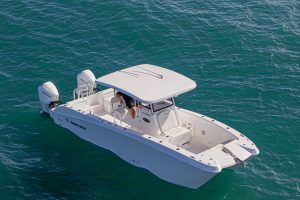

Trim and Handling Differences Between Twin Vee and Other Power Catamarans
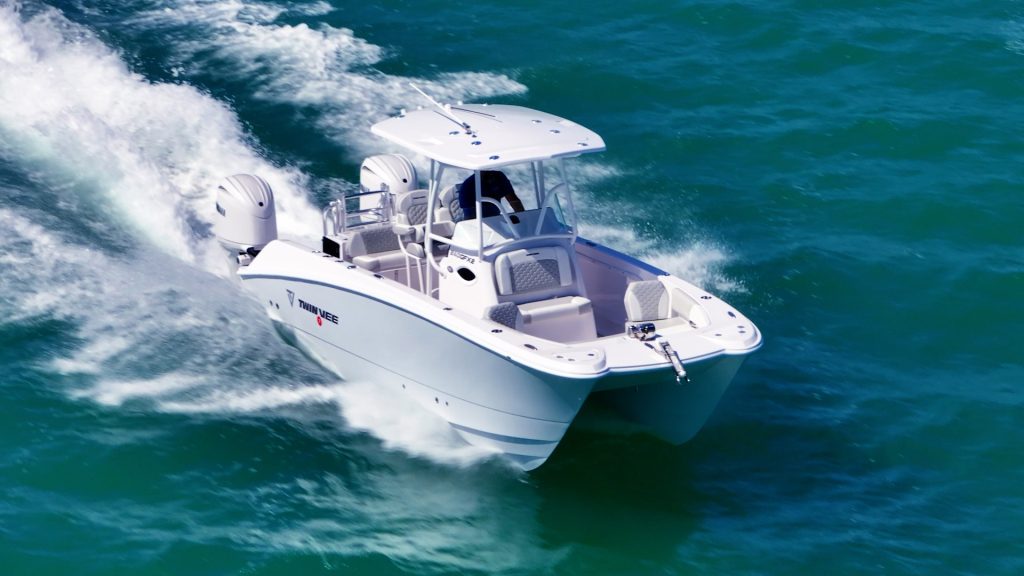
A great question came in from a viewer on our Twin Vee YouTube channel who had just watched an instructional video from another power catamaran manufacturer and noticed that their recommended handling techniques seemed opposite of what we demonstrate. The viewer asked:
Q: “I just watched the World Cat instructional video on maneuvering a cat and they said two things exactly opposite. One is to keep the trim down in a head sea to slice through the waves, not trim back and raise the bow. And second was to retard the power to the inside engine during a turn to get on the lean. Is the Twin Vee a different design, or have you found that your approach just works better?”
A: “That’s a great question. It comes down to the shape of the hulls. World Cat’s twin hulls have a sharper V forward but flatten out lower in the running surface, so they require different trim and throttle techniques. Twin Vee’s hulls carry more of a V shape all the way through. Because of this, we have found that trimming higher and using our own turning method produces the best results for our design.”
Let’s break this down carefully. There is a lot of confusion in the power catamaran world about why one brand tells you to keep trim down while another says trim up. The short answer is that not all cats (or V hulls for that matter) are built the same. The long answer involves understanding hull geometry, tunnel design, and what actually happens under the boat when you adjust trim or throttle.
The Role of Hull Design in Trim Technique
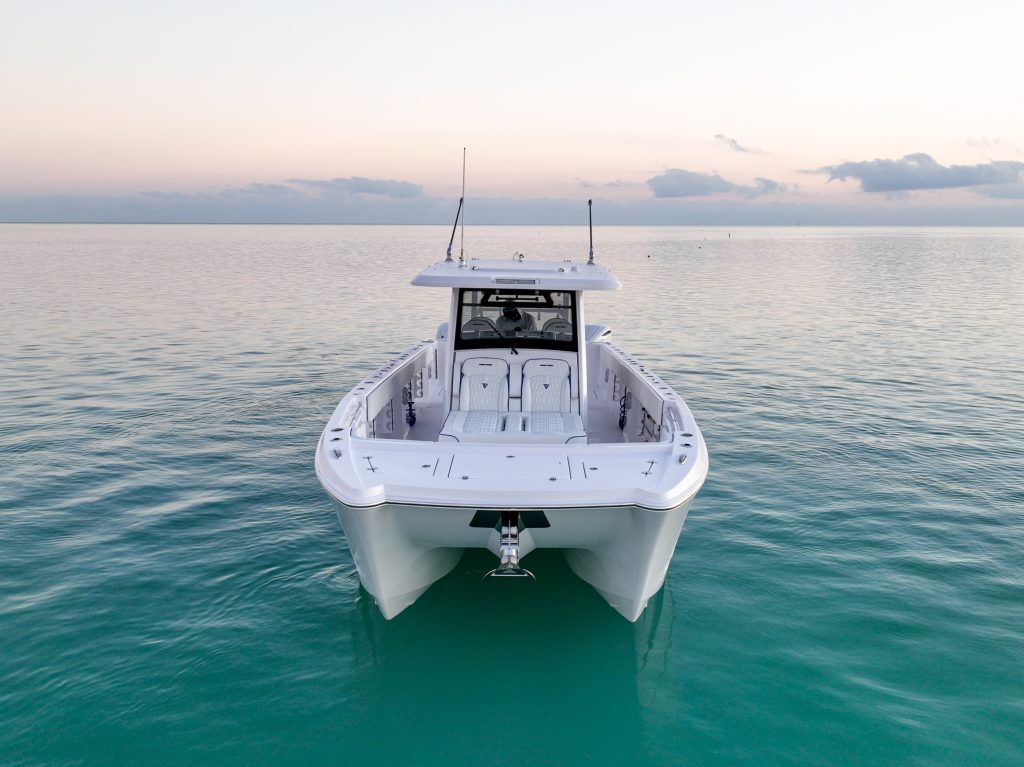
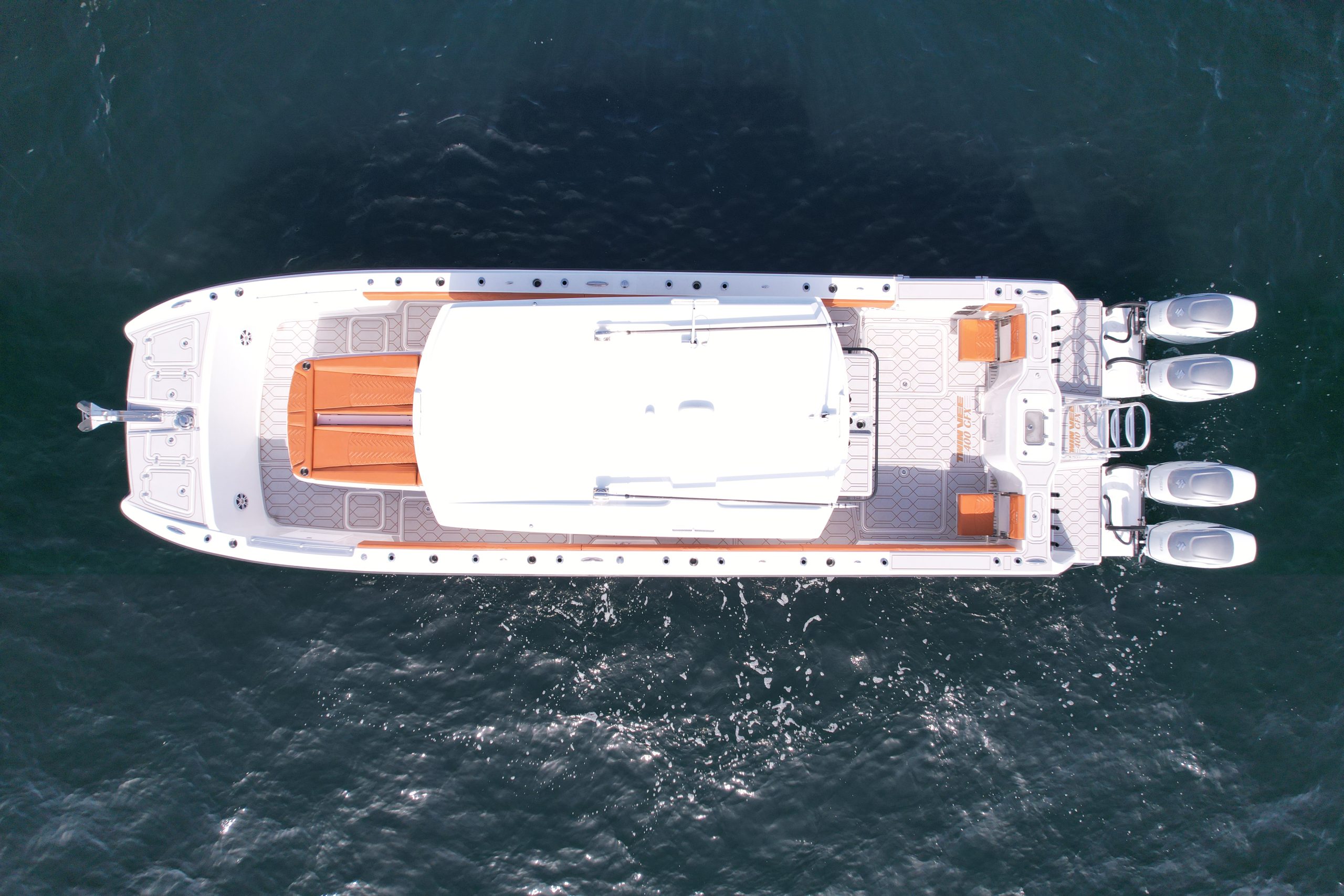
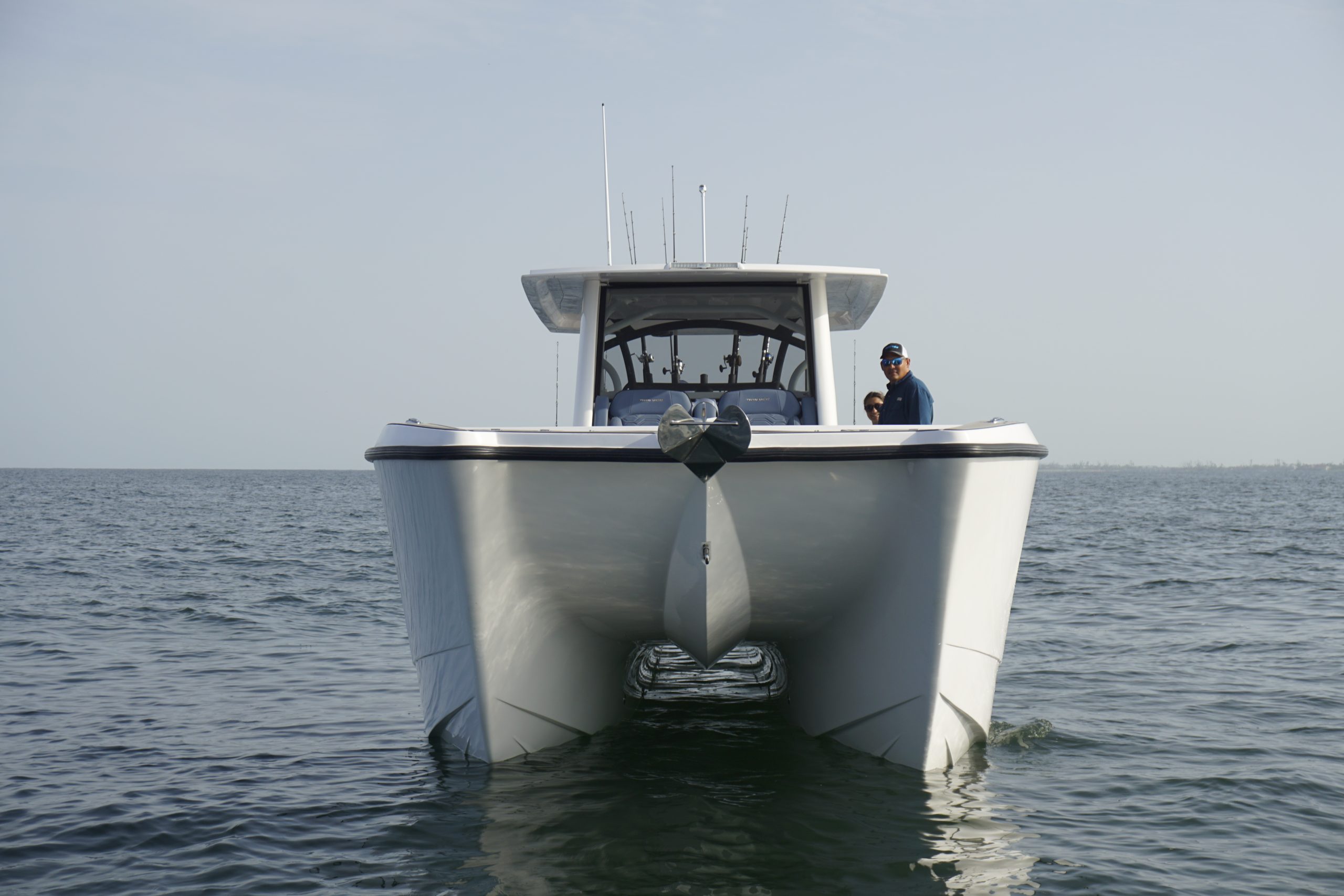
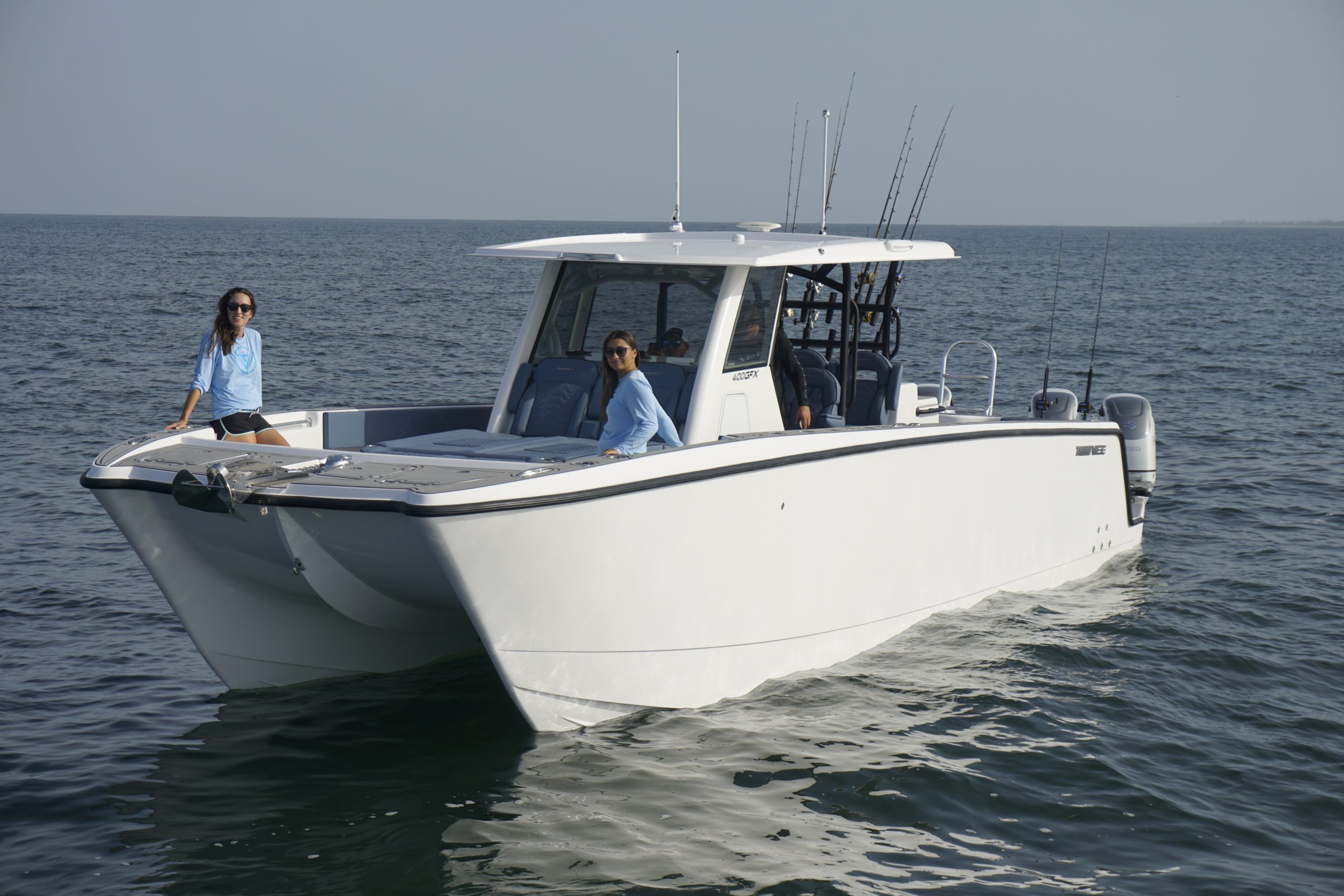
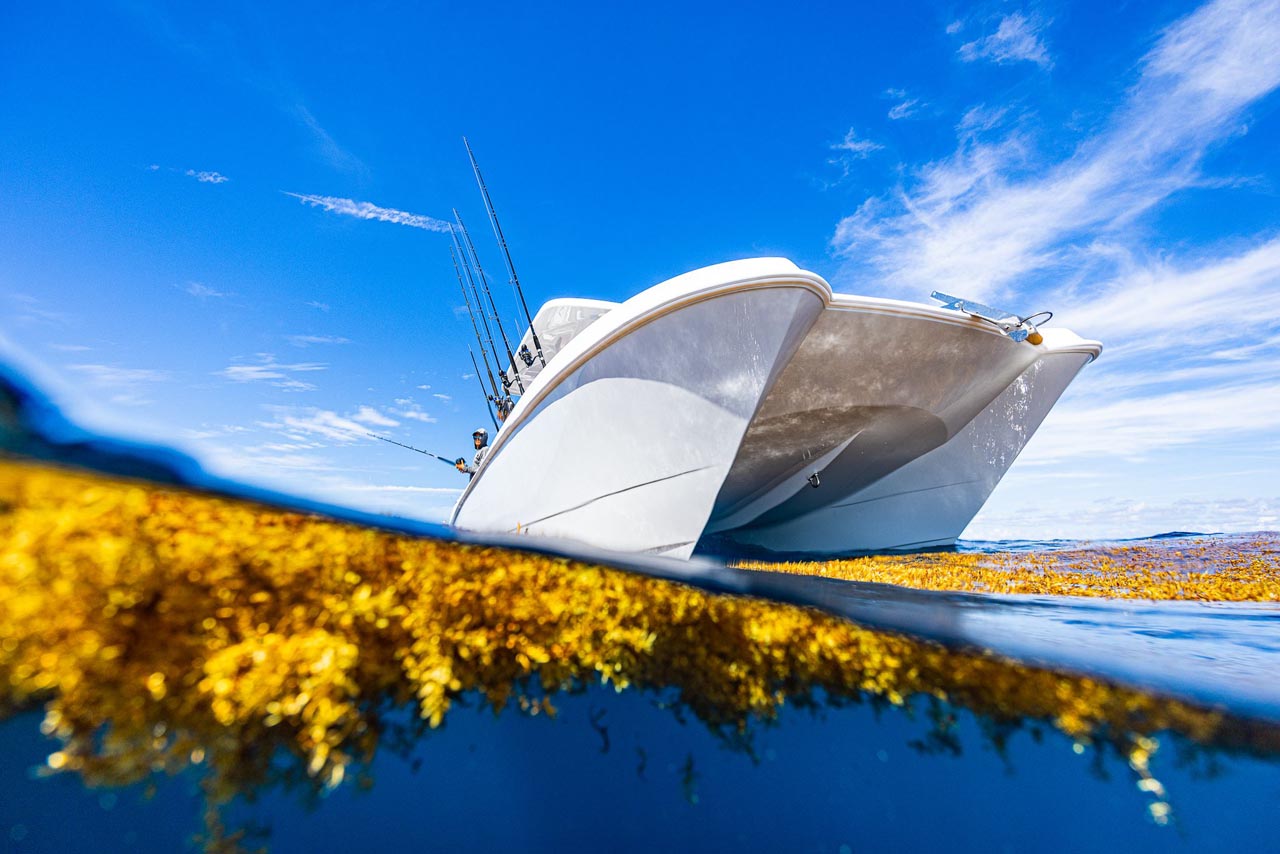
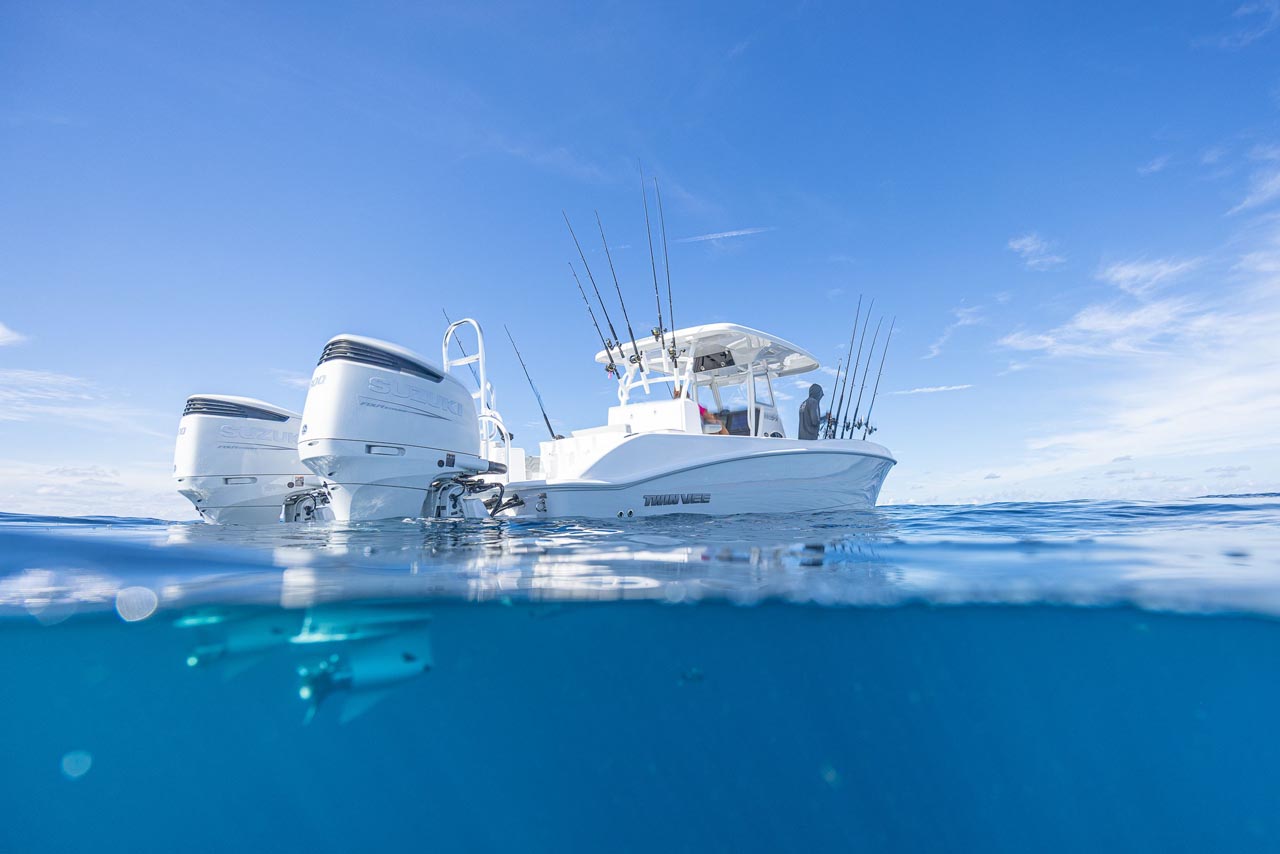
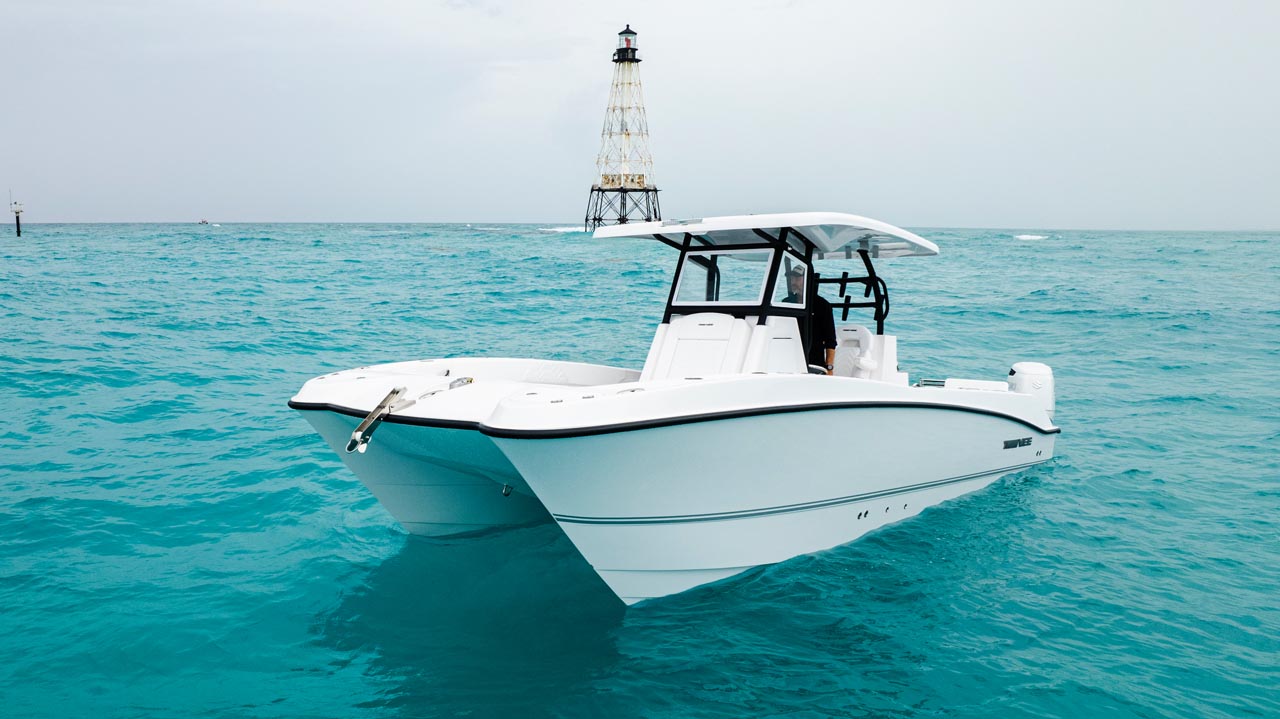
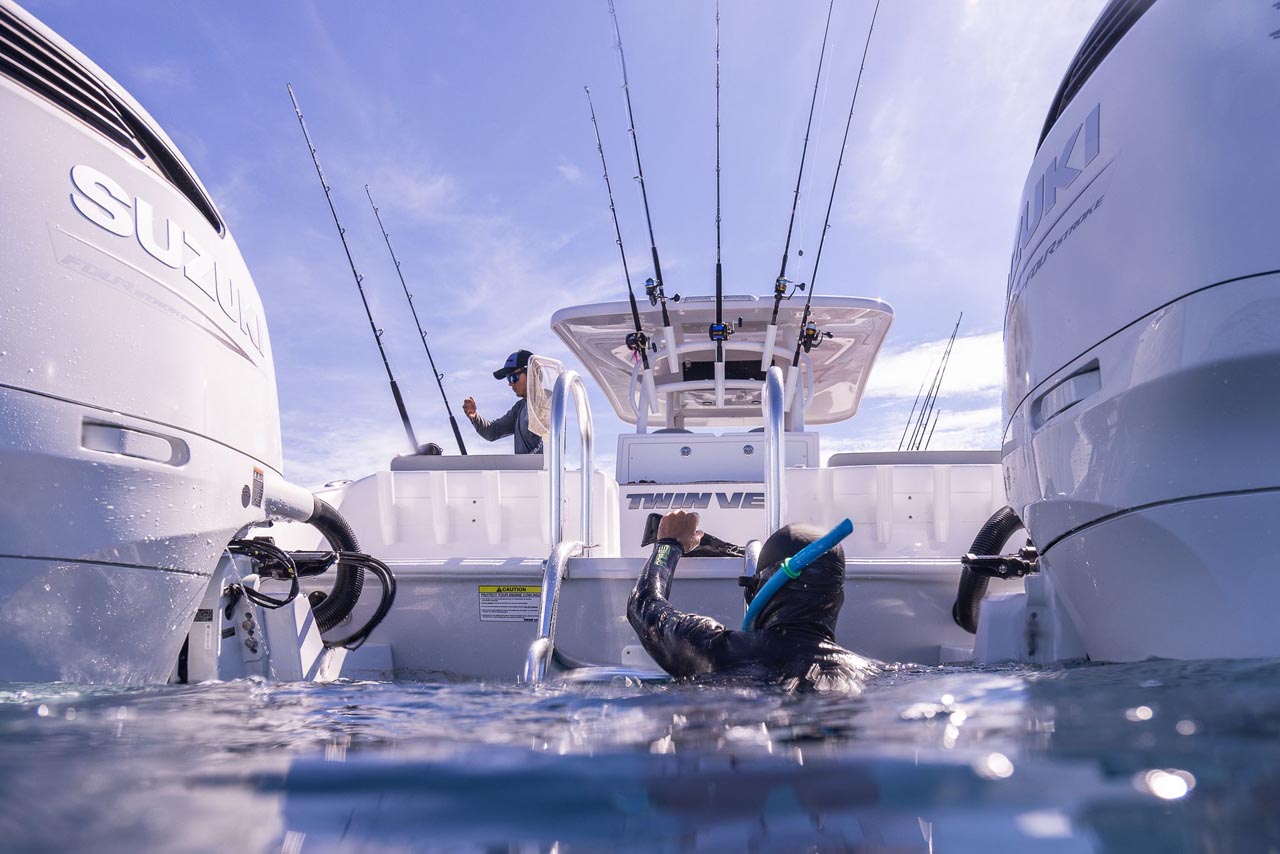
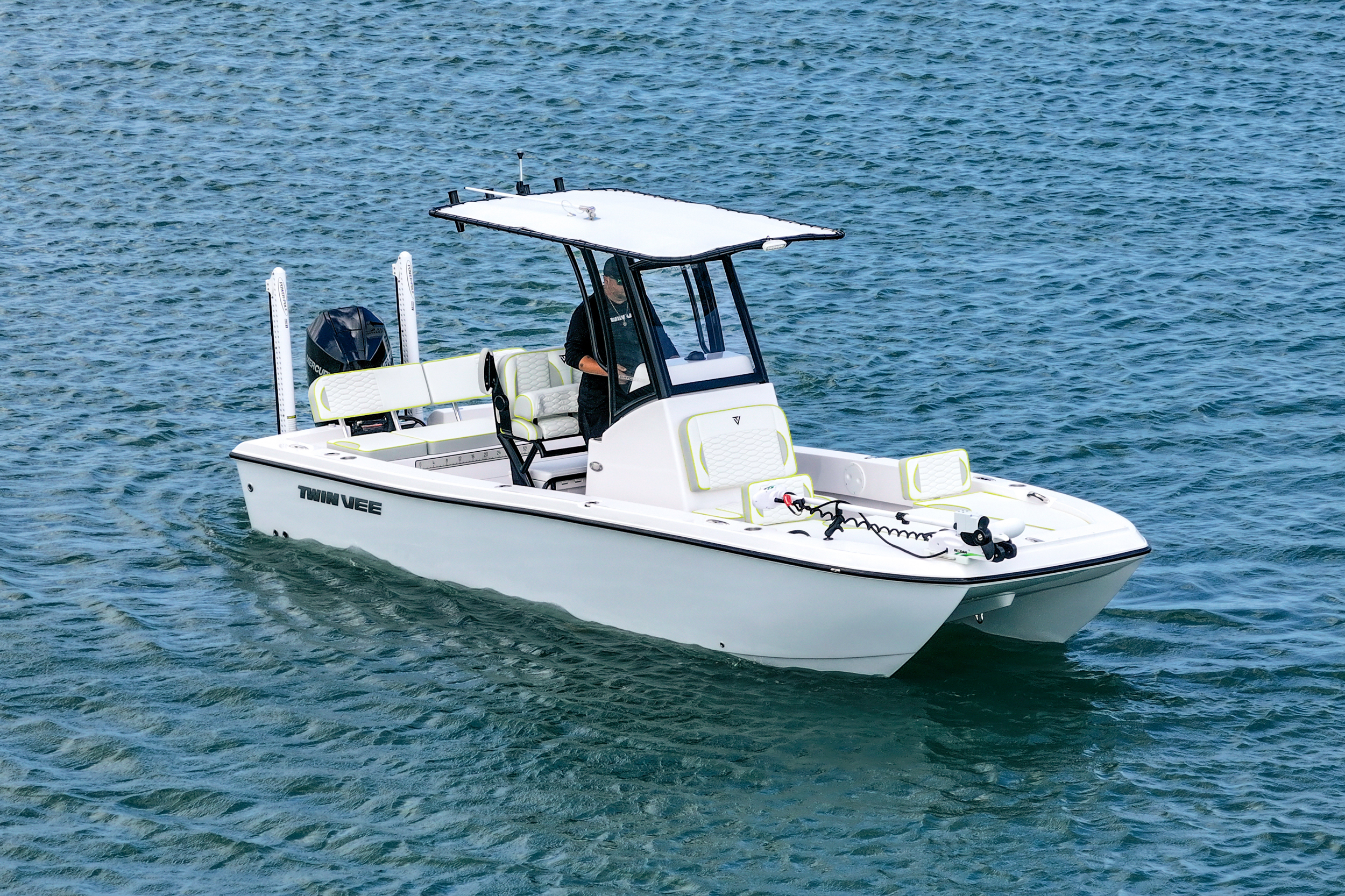
A catamaran hull is made up of two sponsons separated by a tunnel. That tunnel is what gives a power catamaran its soft ride and lift. The shape of the sponsons and tunnel geometry determine how the boat interacts with air and water as speed increases.
Some catamarans, like the World Cat models referenced in the question, are built with a hull that transitions from a sharp V at the bow to a flatter running surface aft. This design helps them plane easily and stay steady at lower speeds, but it changes how water and air move through the tunnel. In rough head seas, that flatter aft section benefits from keeping the trim lower so the bow can slice through waves rather than lifting over them.
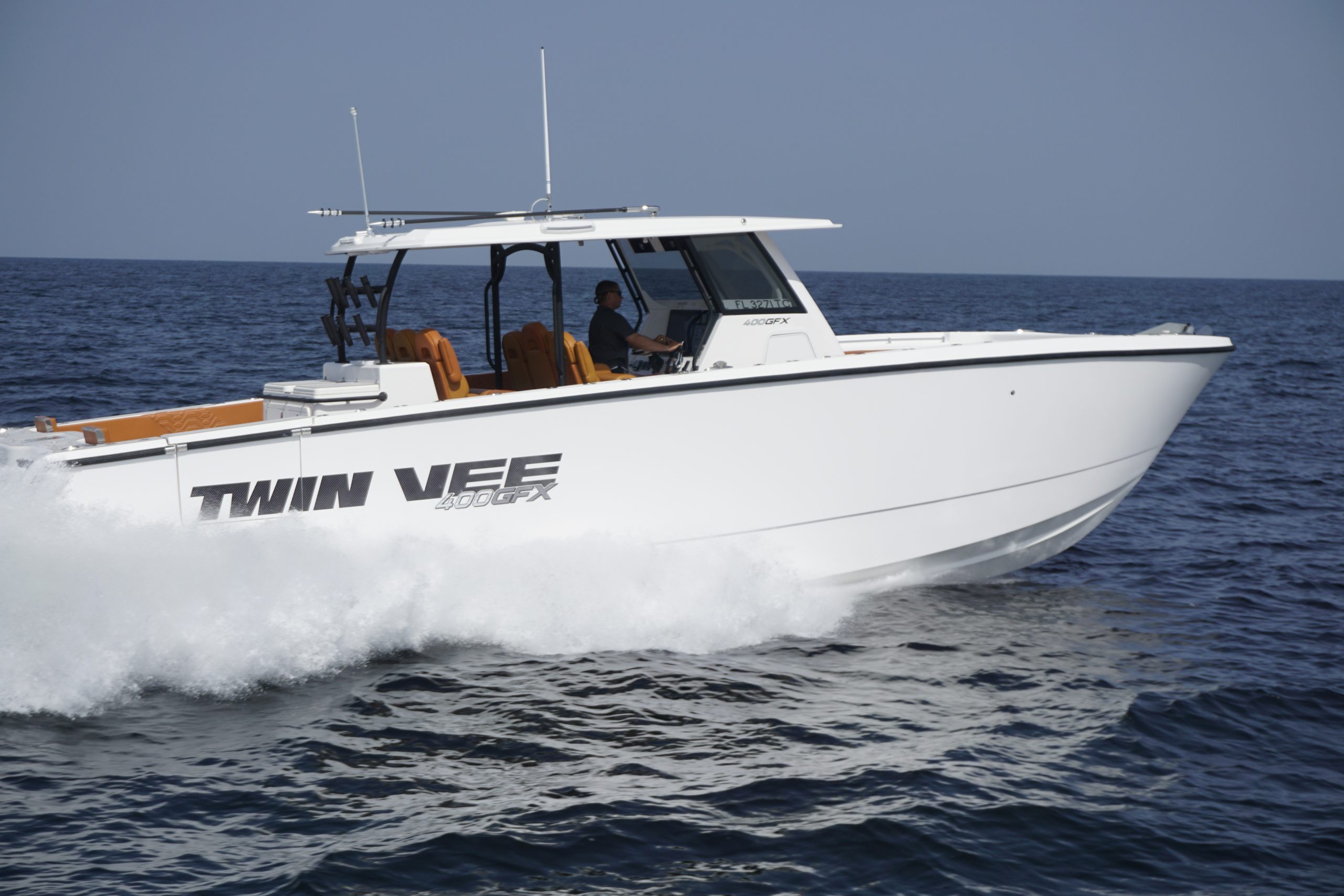
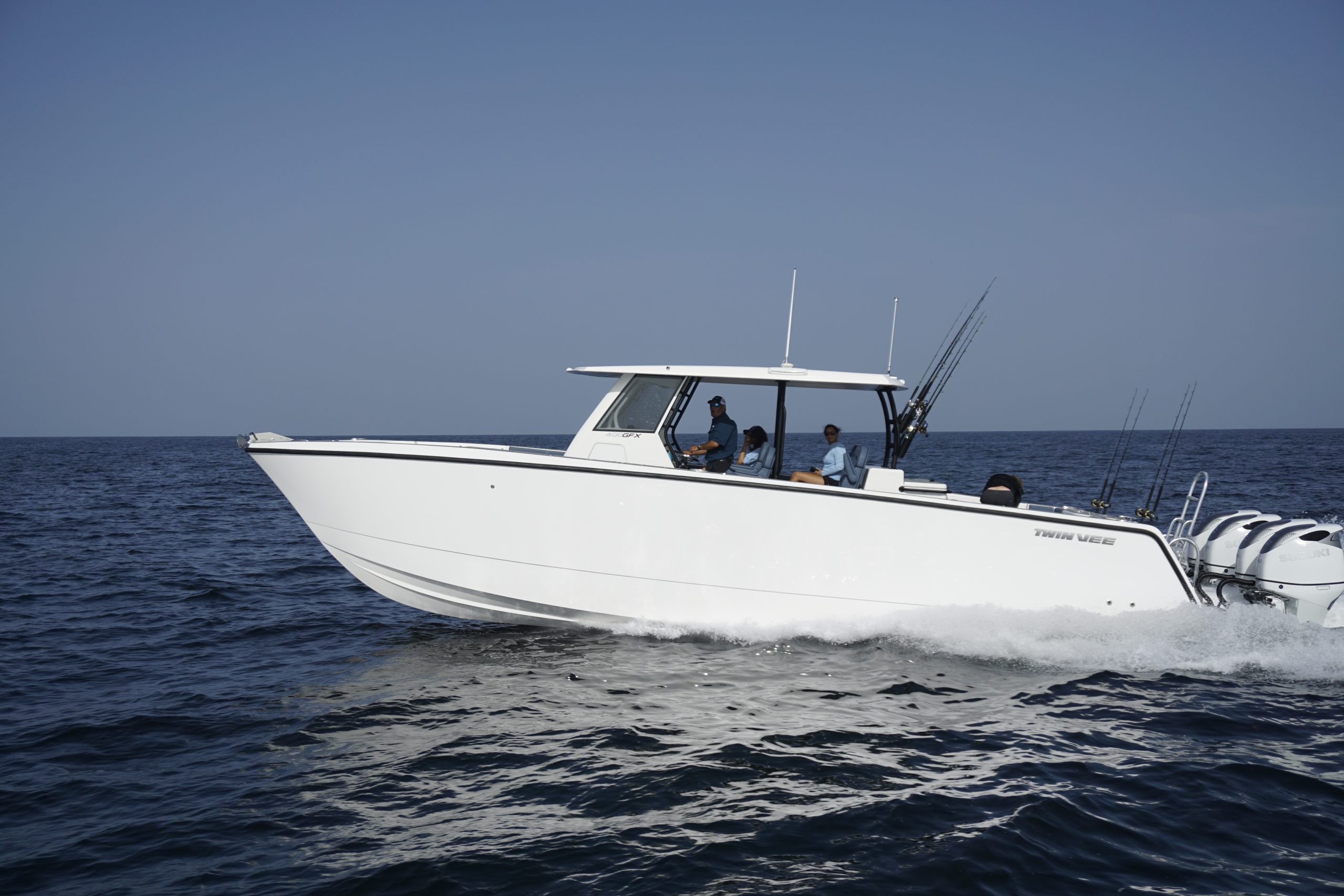
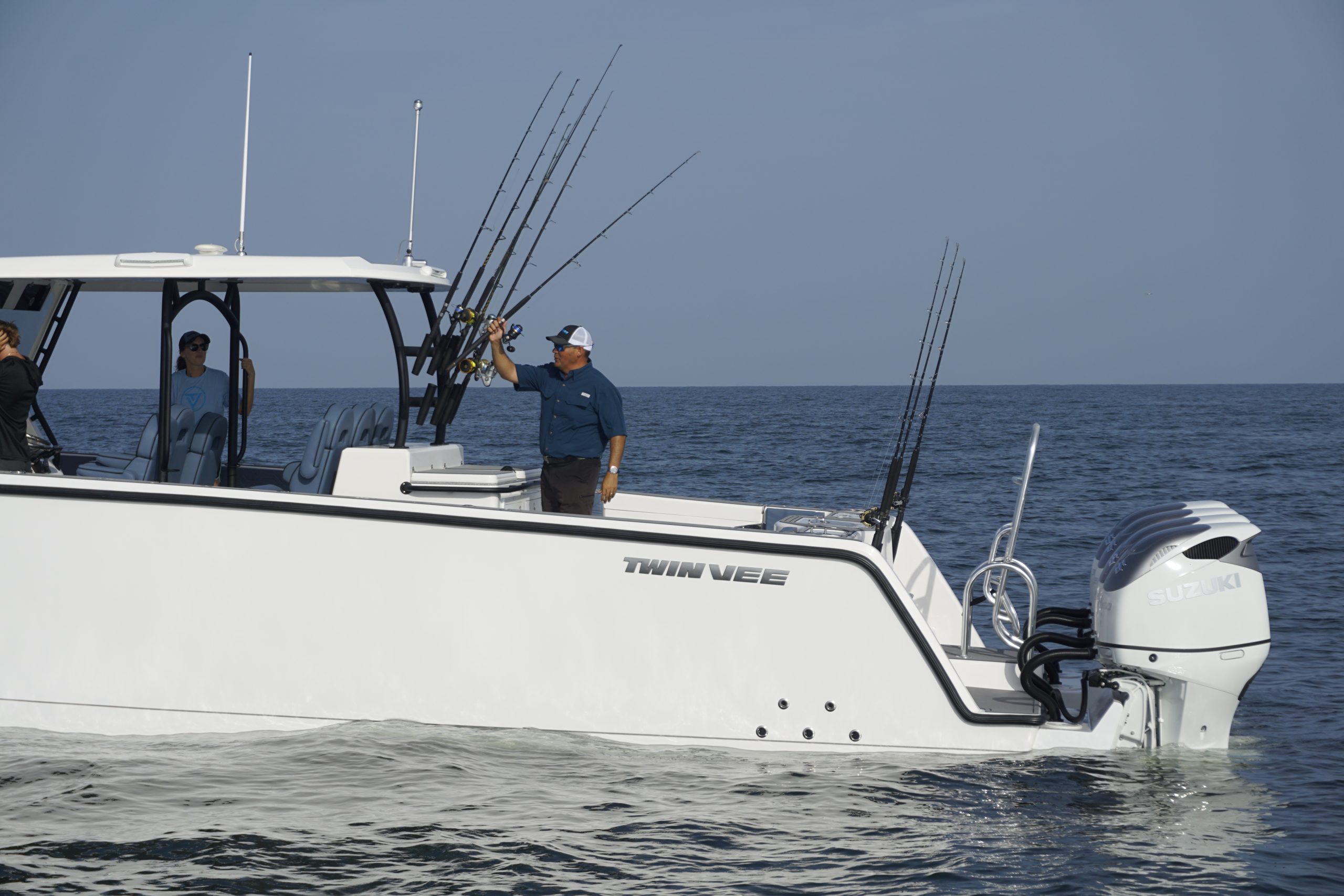
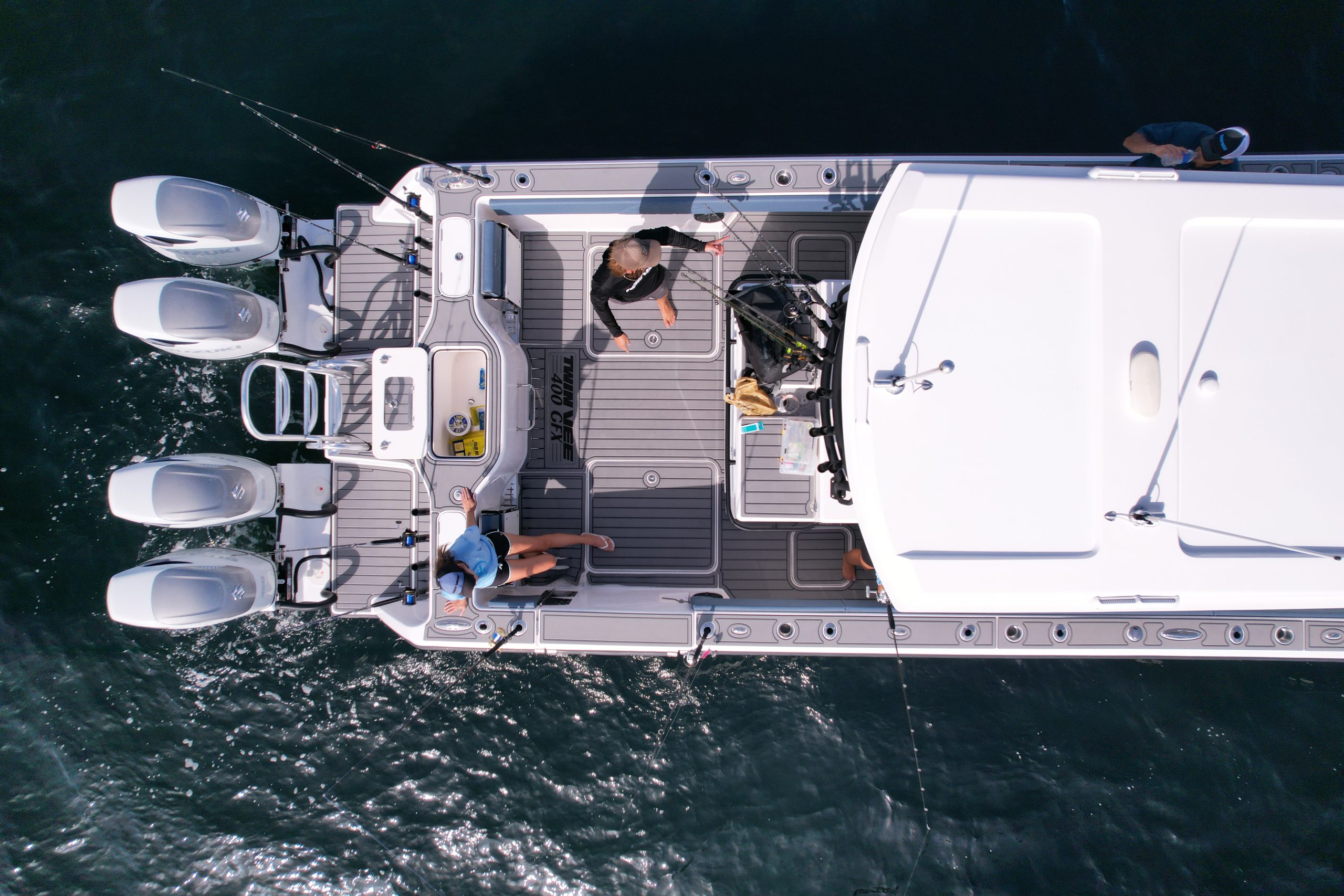
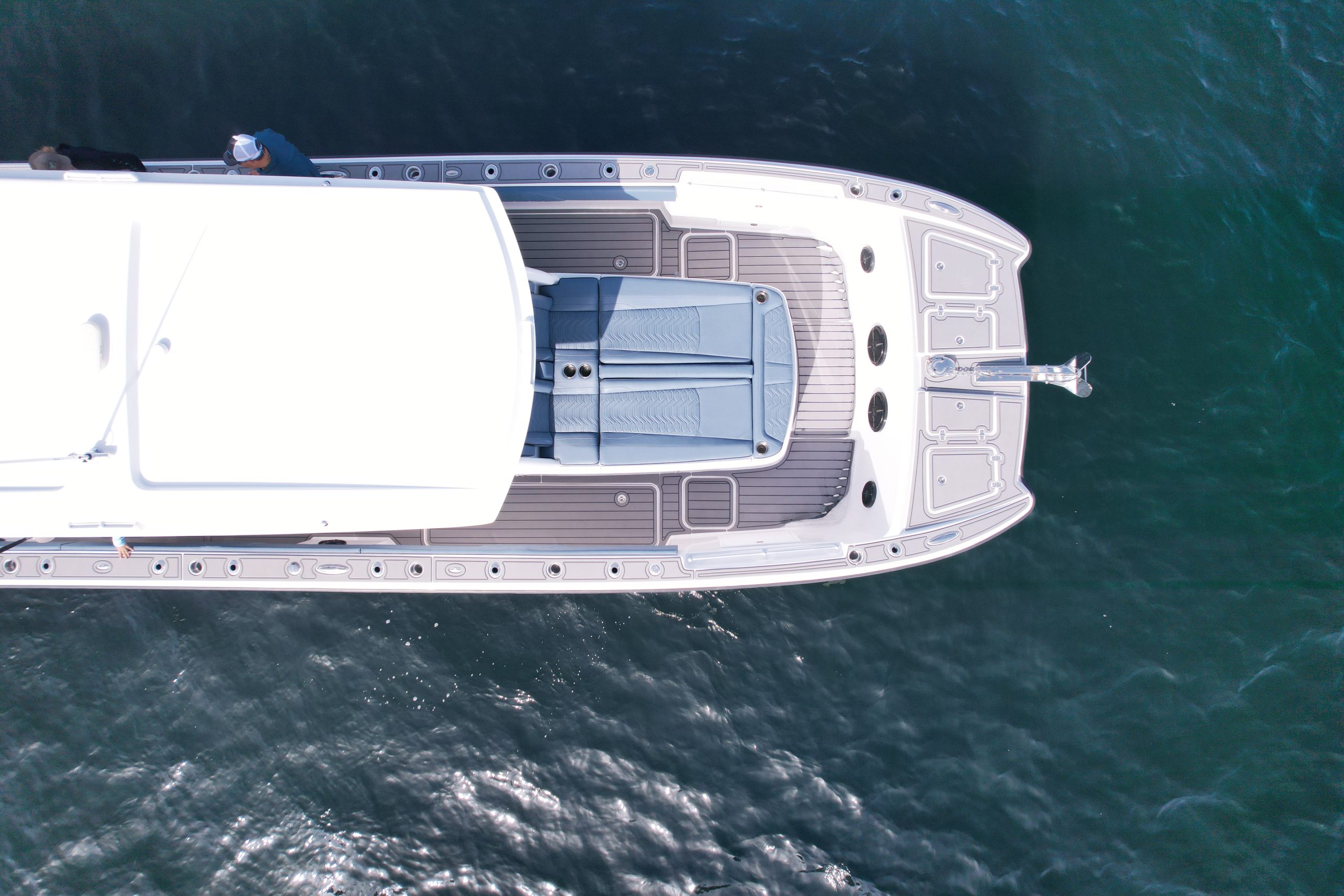
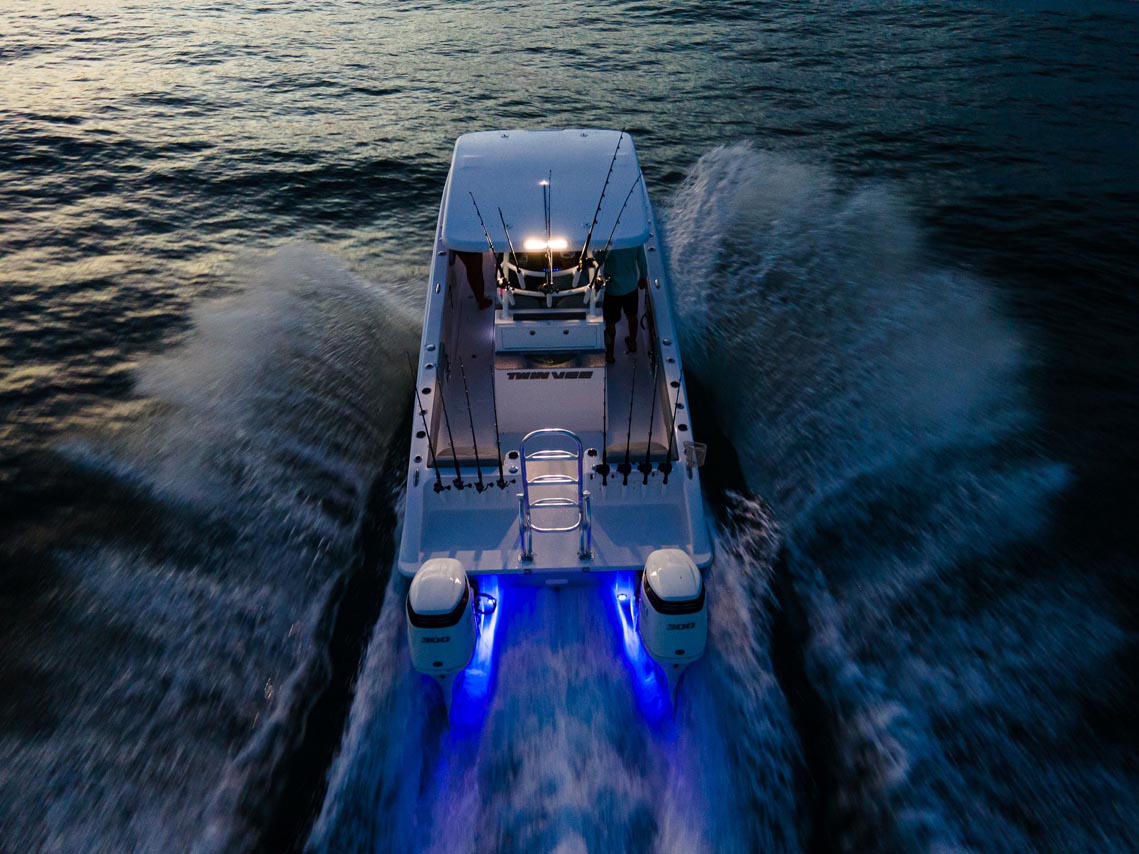
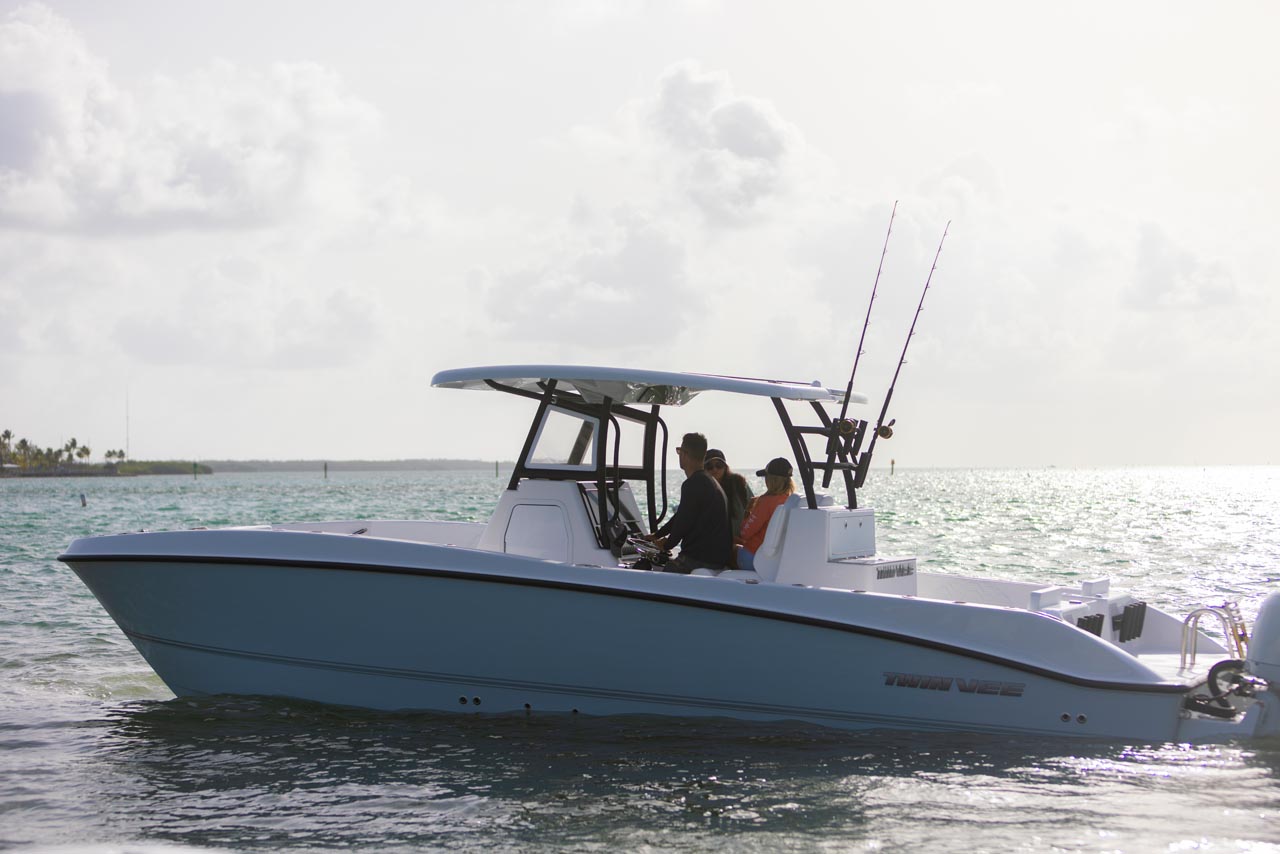
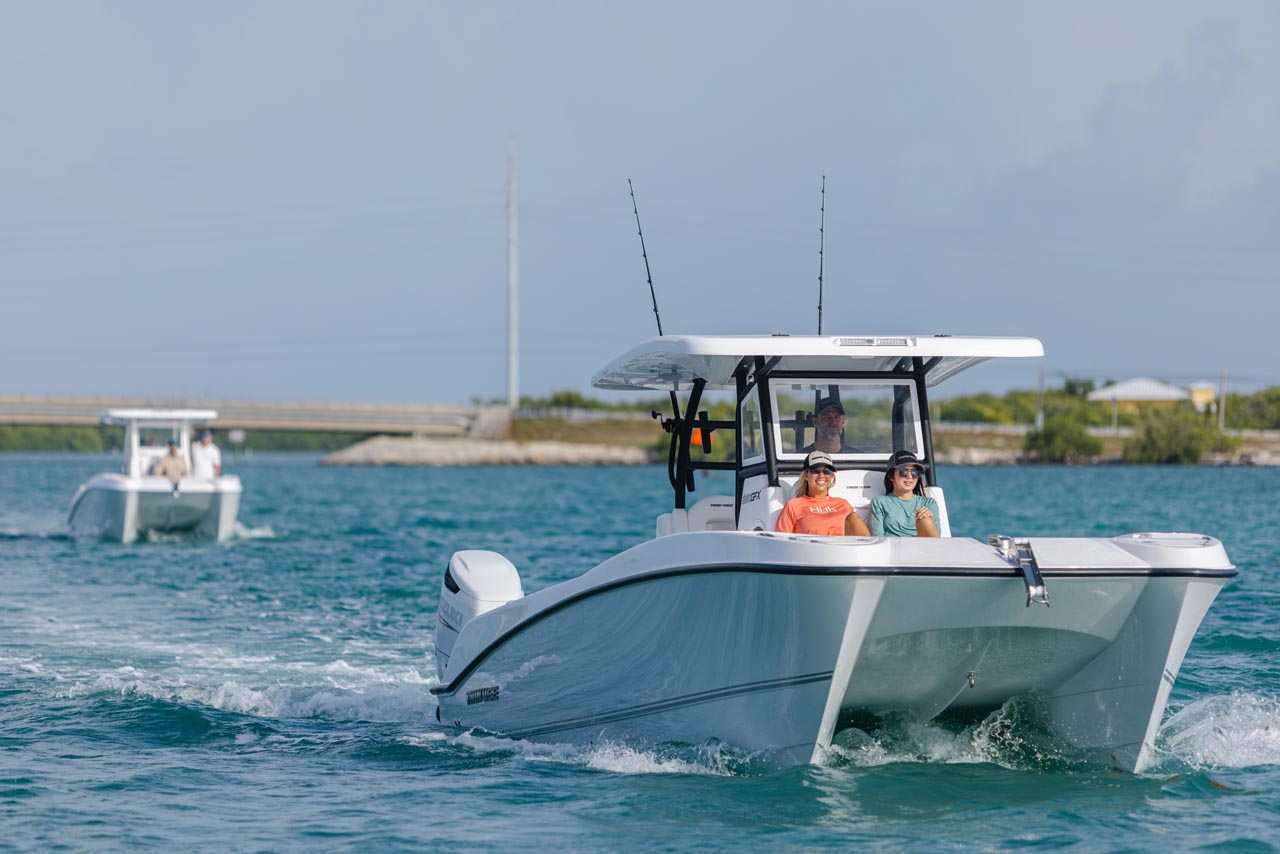
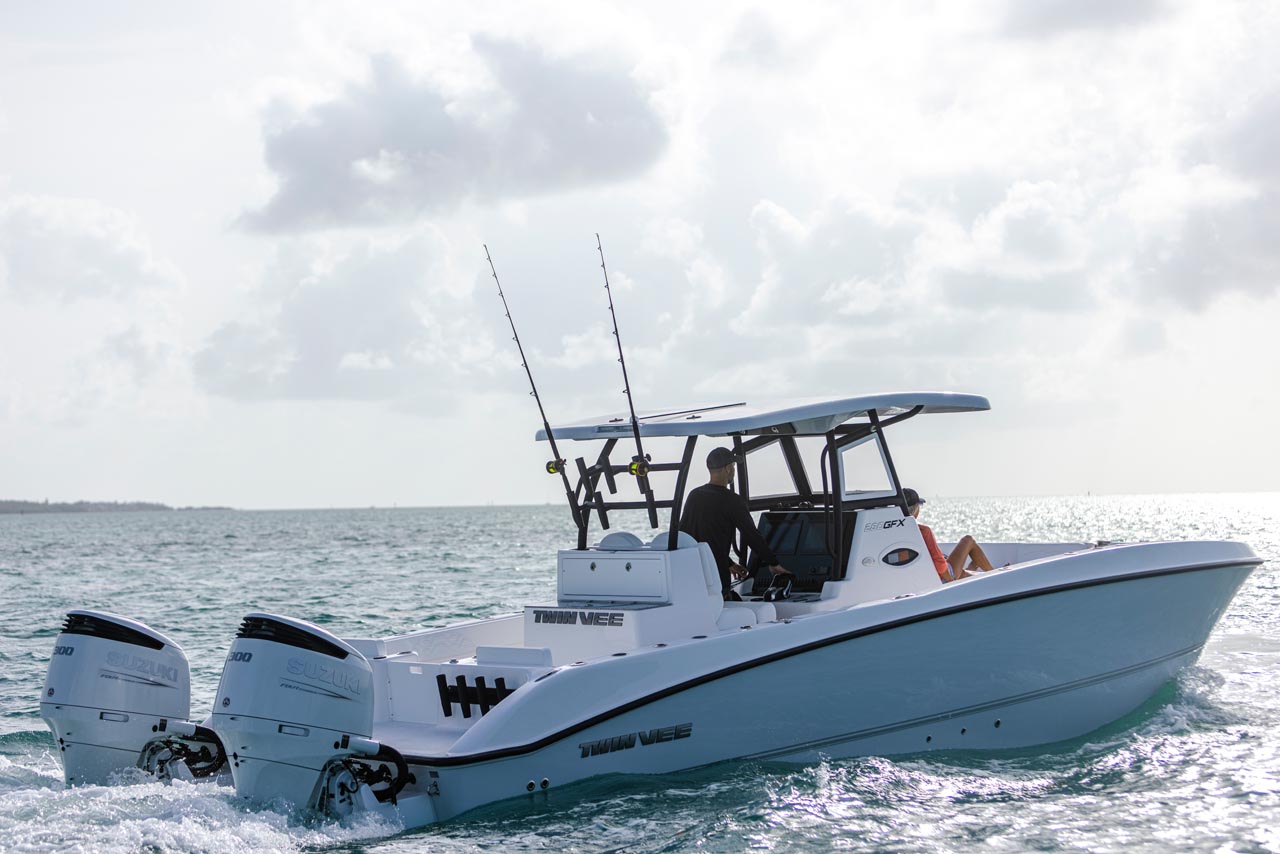
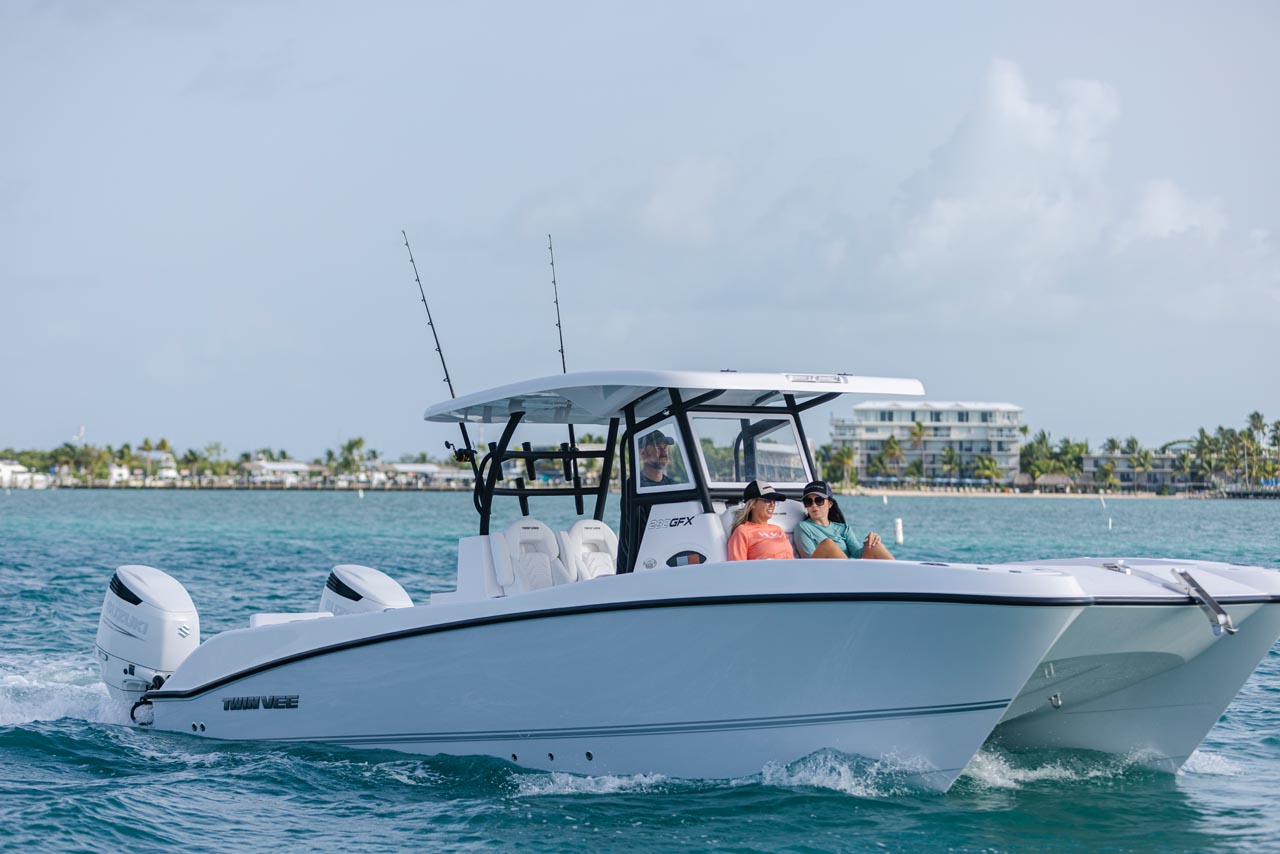
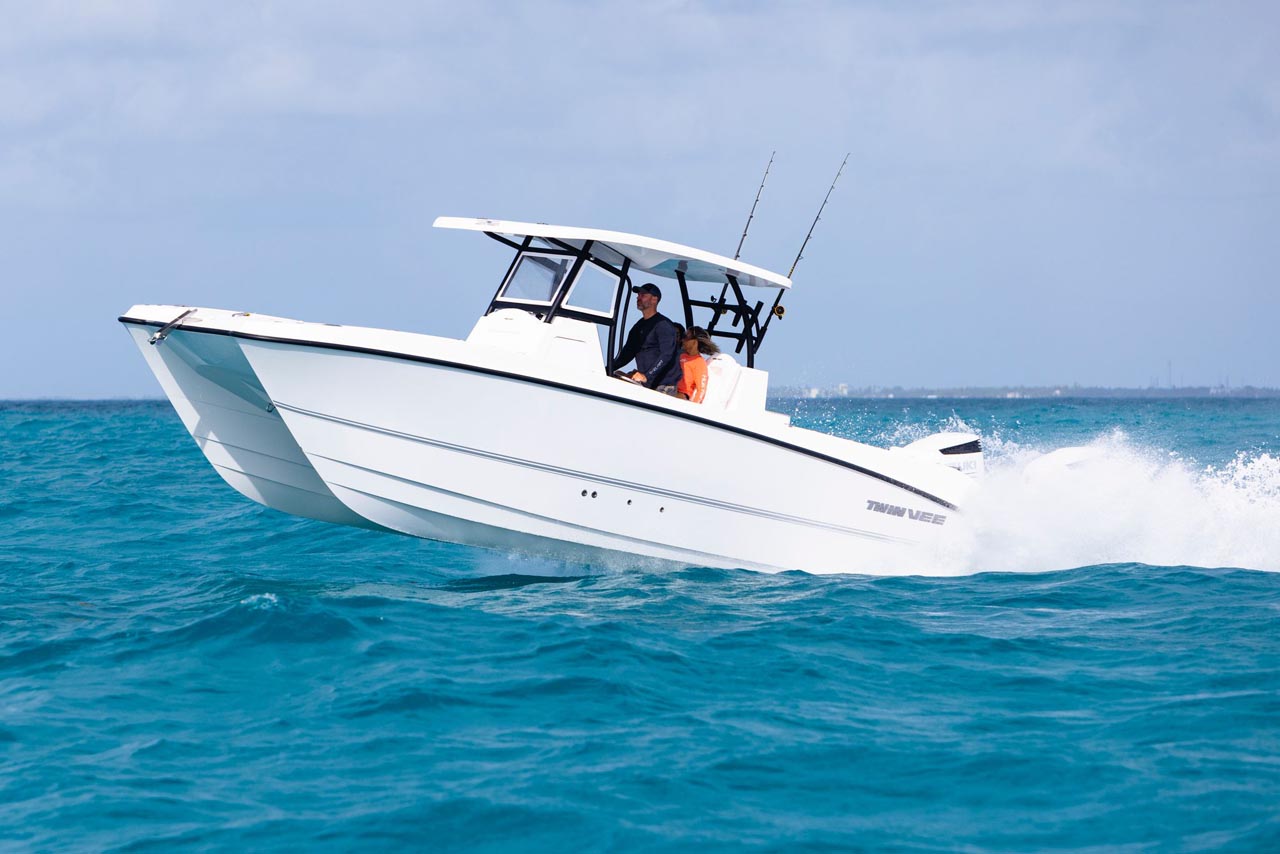
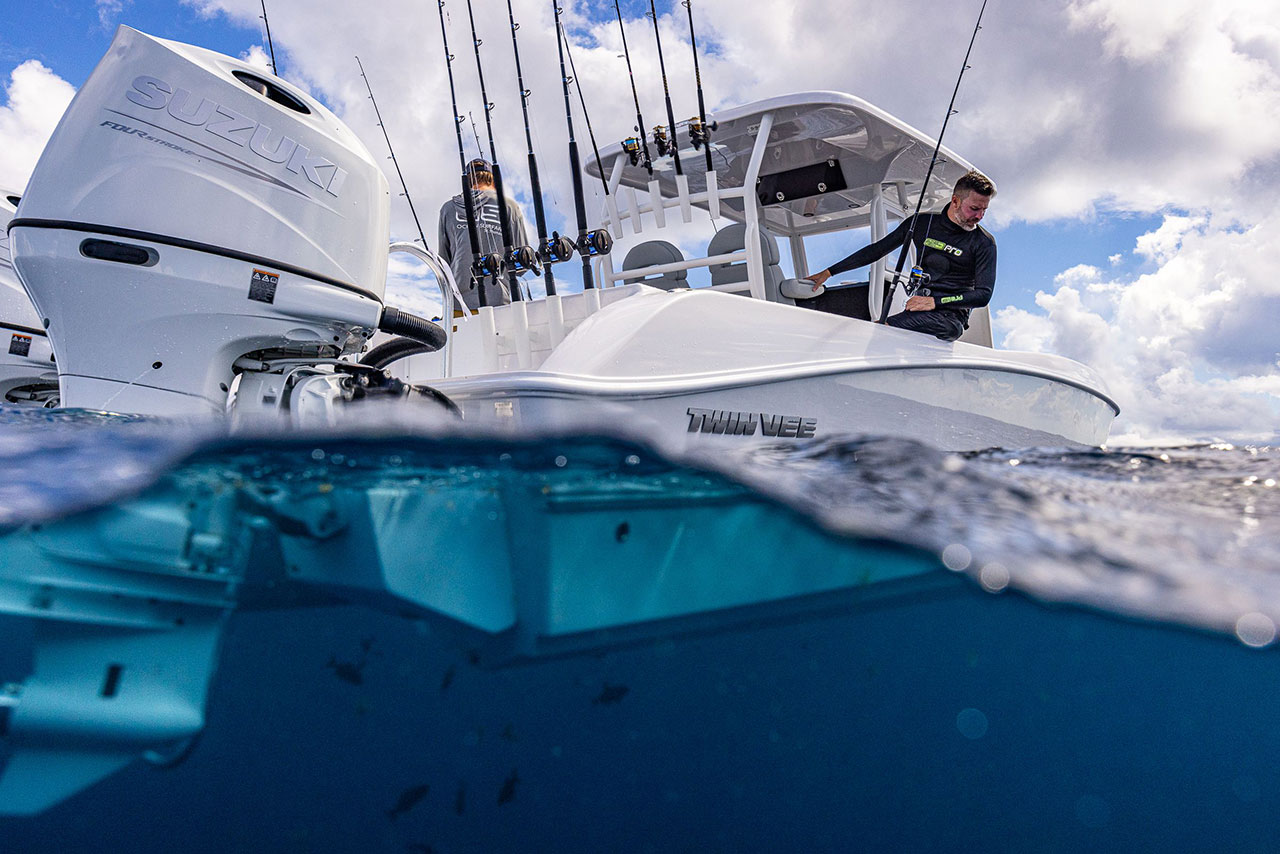
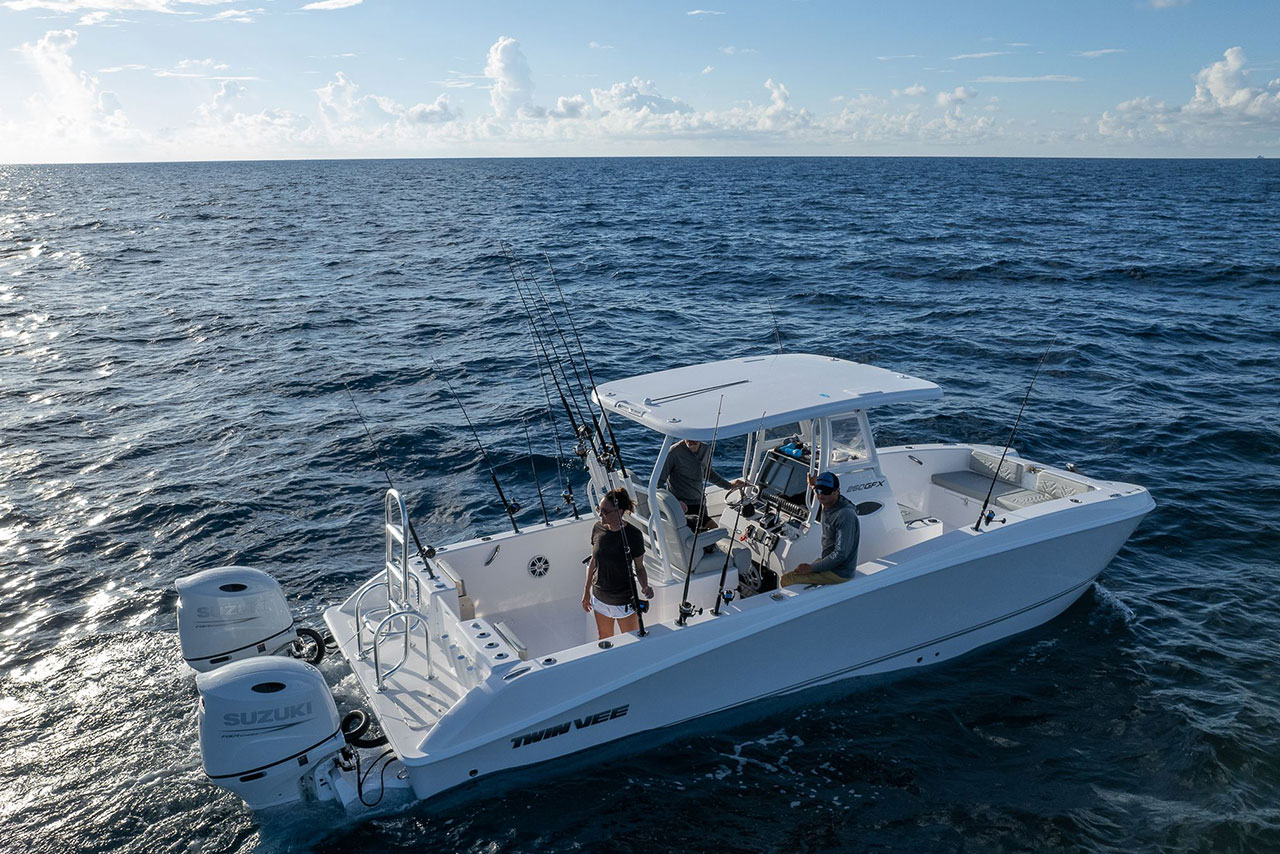
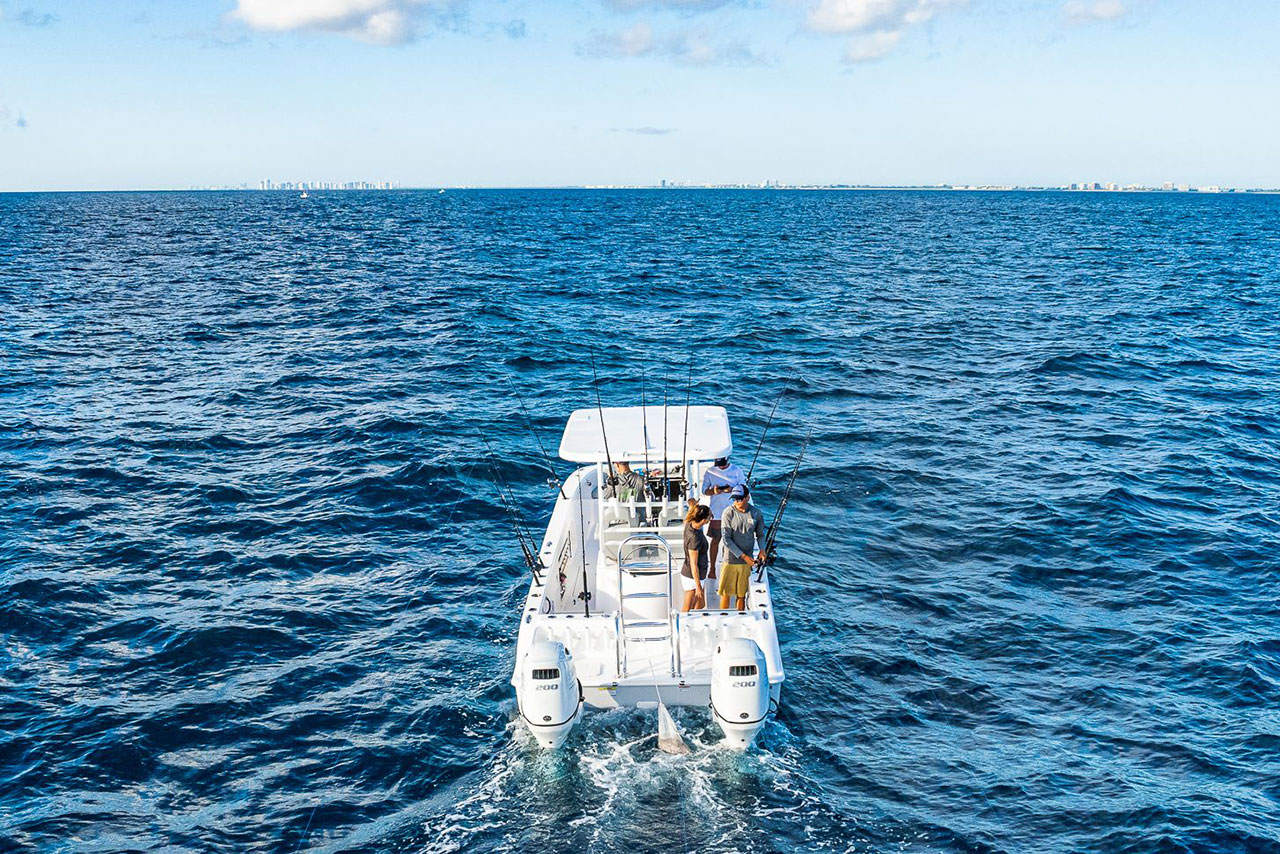
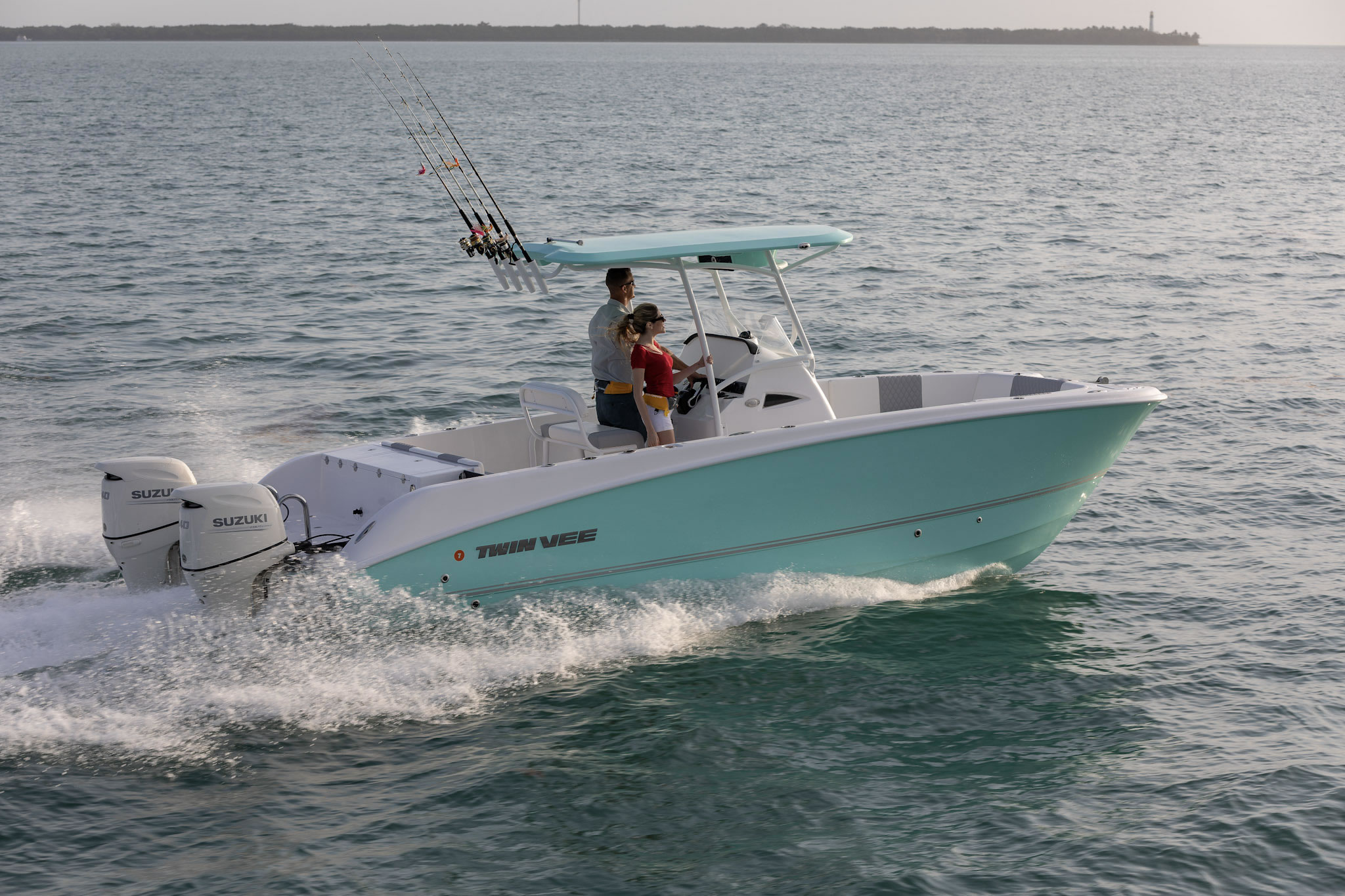
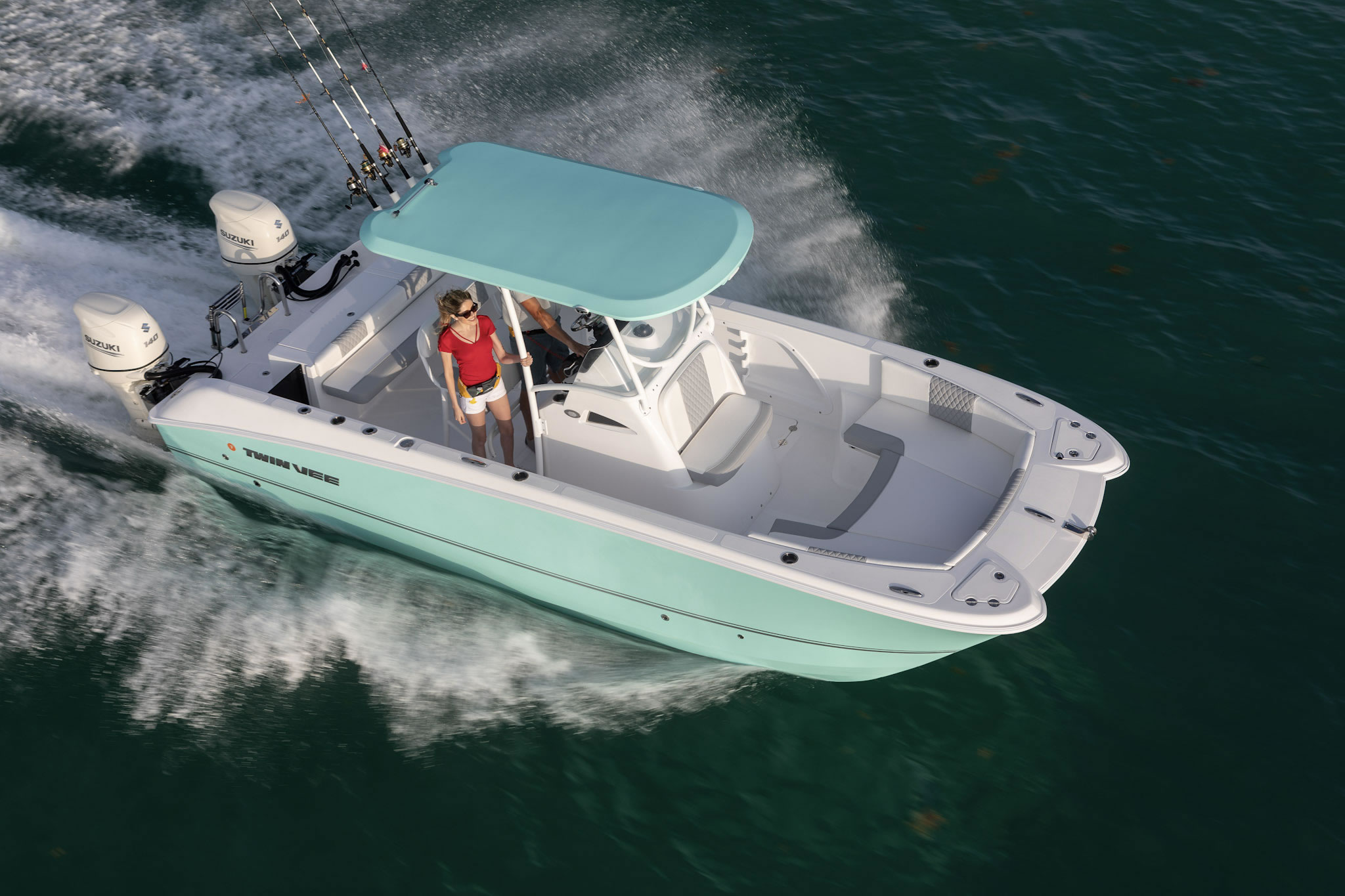
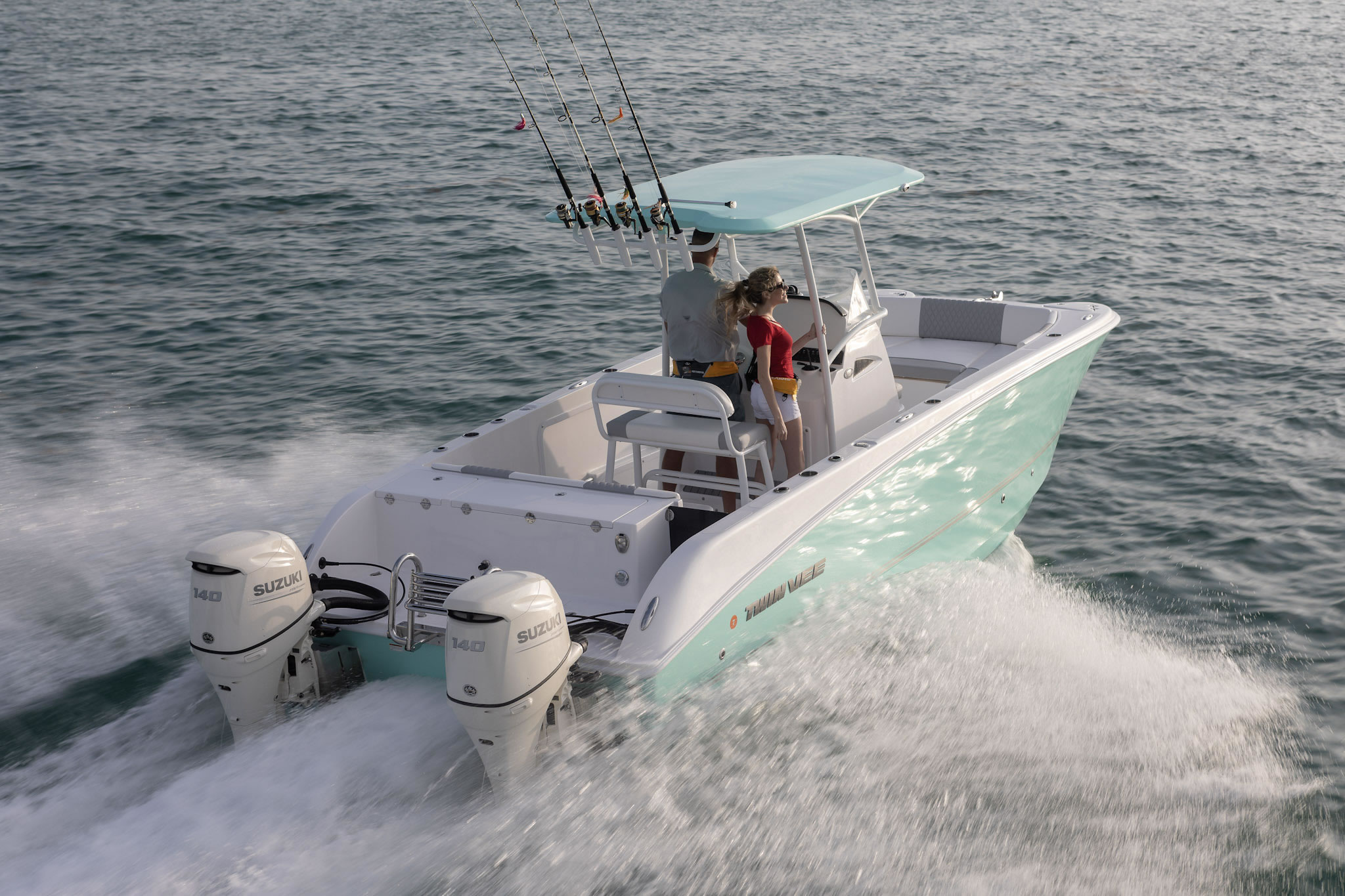
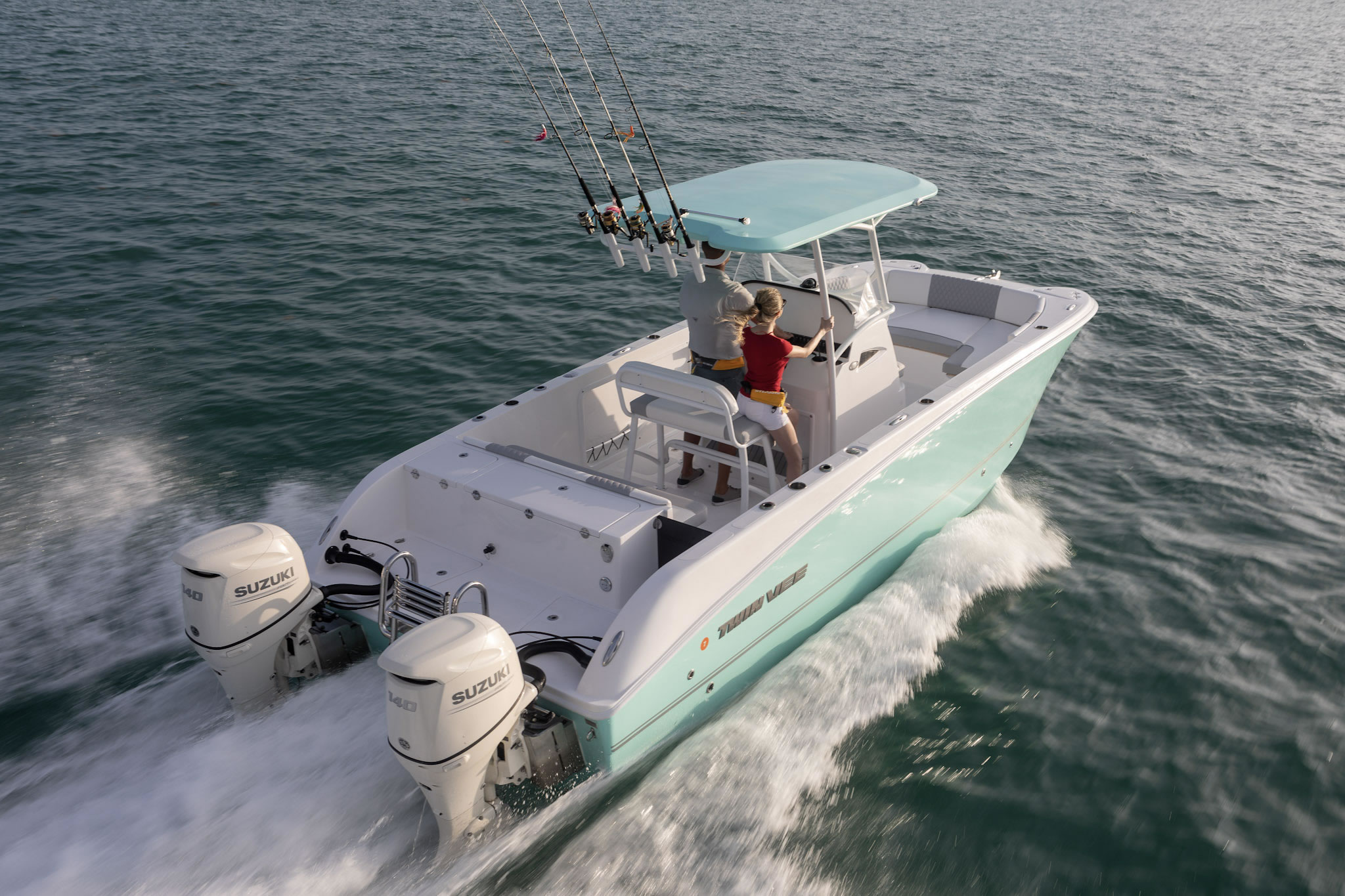
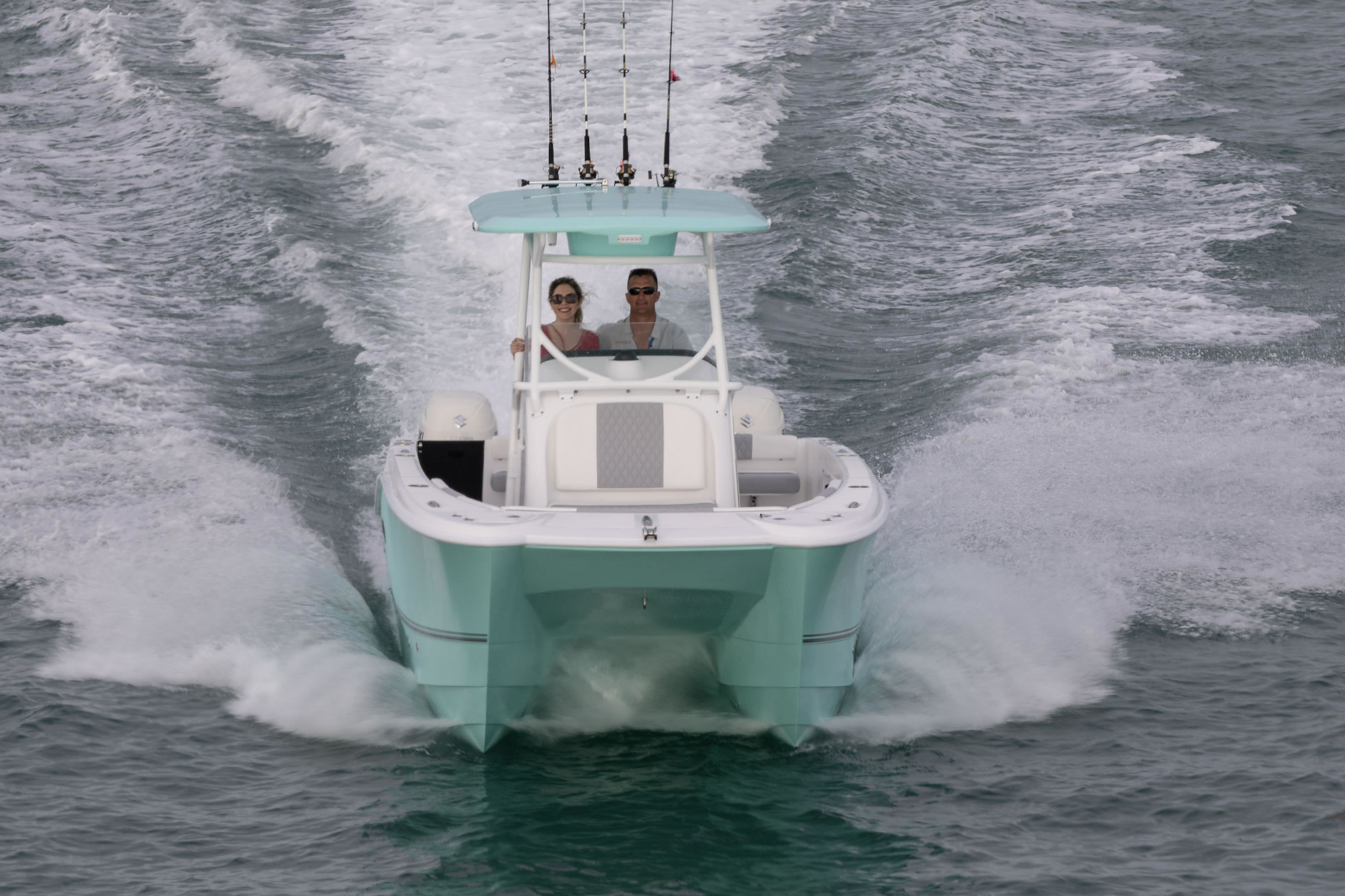
Twin Vee’s hulls, however, are designed differently. Our boats carry a continuous V profile from bow to stern, with a more consistent deadrise angle and a deeper tunnel. That geometry responds better when the engines are trimmed higher. Raising the bow allows air to flow freely through the tunnel, which helps cushion the ride and maintain speed without pounding.
In other words, trimming higher on a Twin Vee doesn’t just lift the boat for speed; it enhances the natural aeration that our hulls are built to use.
Why Twin Vee Prefers Trim Up in Head Seas
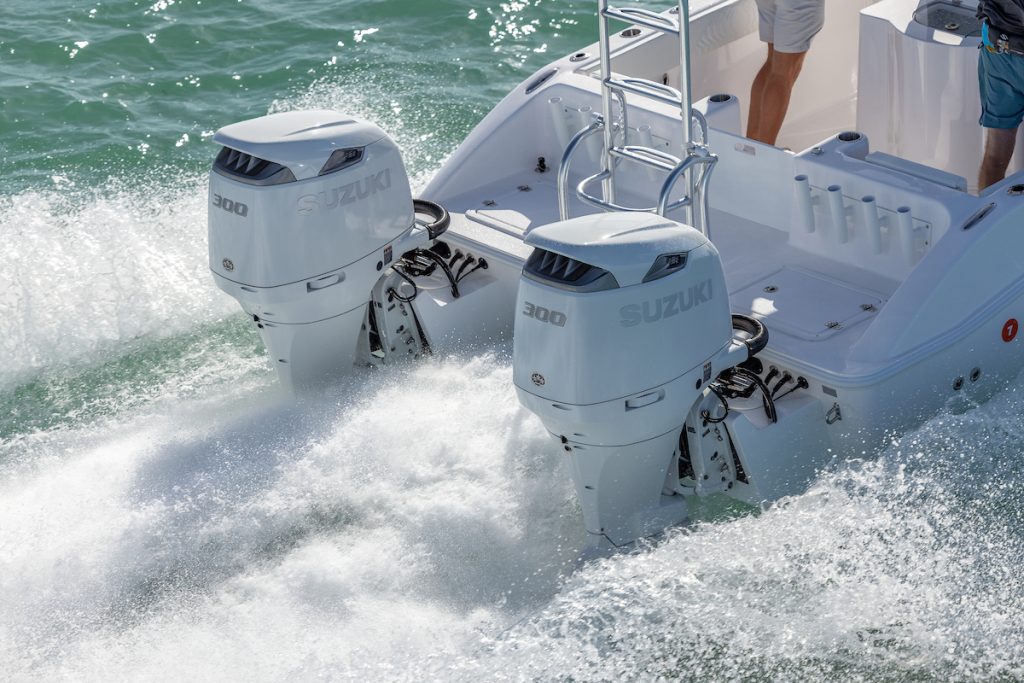
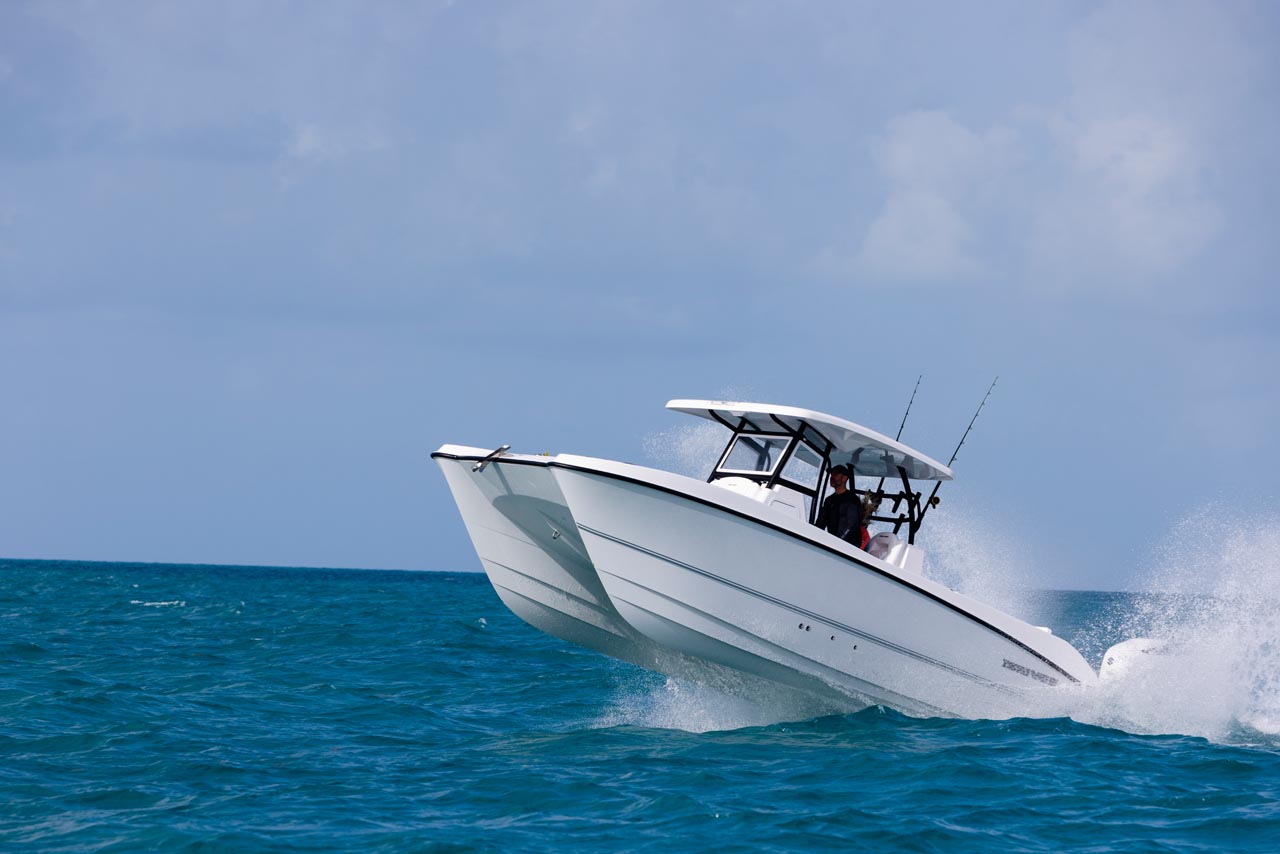
On a Twin Vee, trimming up is part of how the hull achieves its performance and ride quality. When the trim is raised, the propellers angle slightly upward, shifting lift toward the stern. This brings the bow up and allows the tunnel to do what it was designed to do: compress air and water between the sponsons to create a cushion of lift.
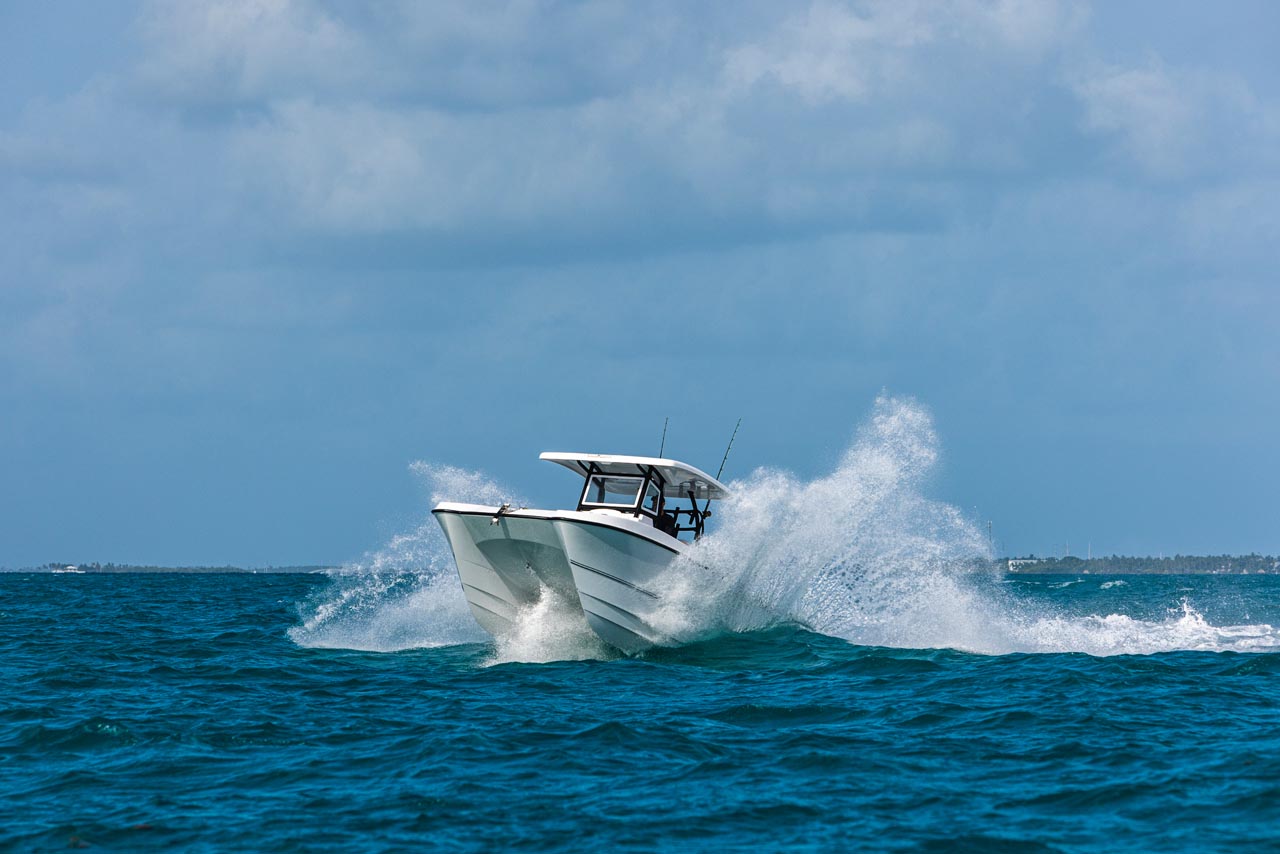
In a head sea, this lift helps the boat stay on top of the water rather than forcing its way through each wave. That’s why our captains and test teams always emphasize trimming until the props are just shy of cavitation, then backing down slightly until the sound smooths out.
Keeping the trim too low forces the bows downward, which can lead to “bow steering” or wallowing, where the hulls try to follow every contour of the wave surface. You may also see spray breaking forward of the helm instead of aft where it should be.
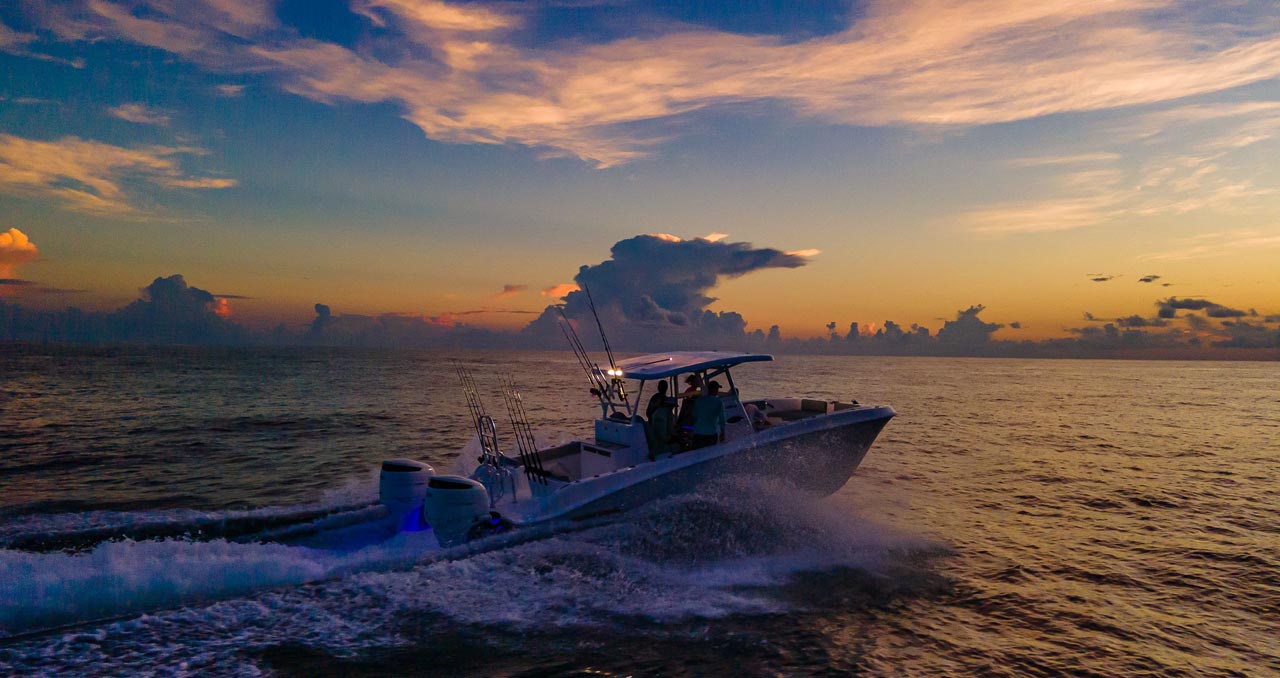
By contrast, properly trimmed Twin Vees run flatter, drier, and with better fuel efficiency, even when crossing waves at speed. The key is to let the hull ride on its designed cushion of air and water.
Turning Technique: Power Distribution and Lean
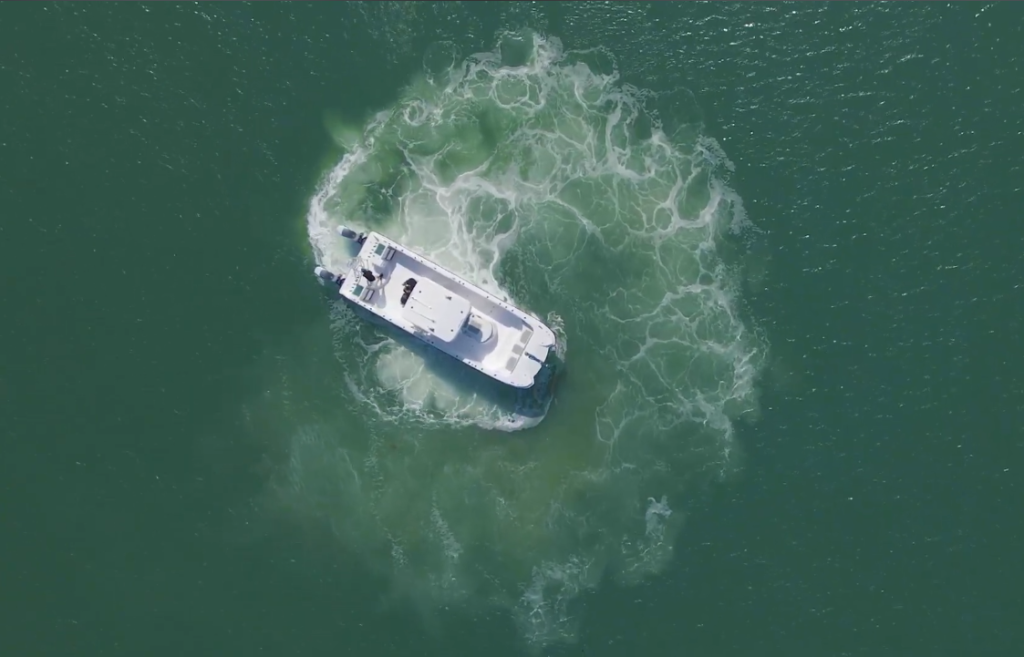
The second part of the question involves turning, specifically whether to reduce throttle on the inside or outside engine. This is where center console power catamaran handling can vary significantly between brands.
Some manufacturers recommend throttling back the inside engine during a turn to create drag on that side, causing the boat to lean into the turn. That method suits hulls that are relatively flat at the stern and need that induced lean to feel balanced.
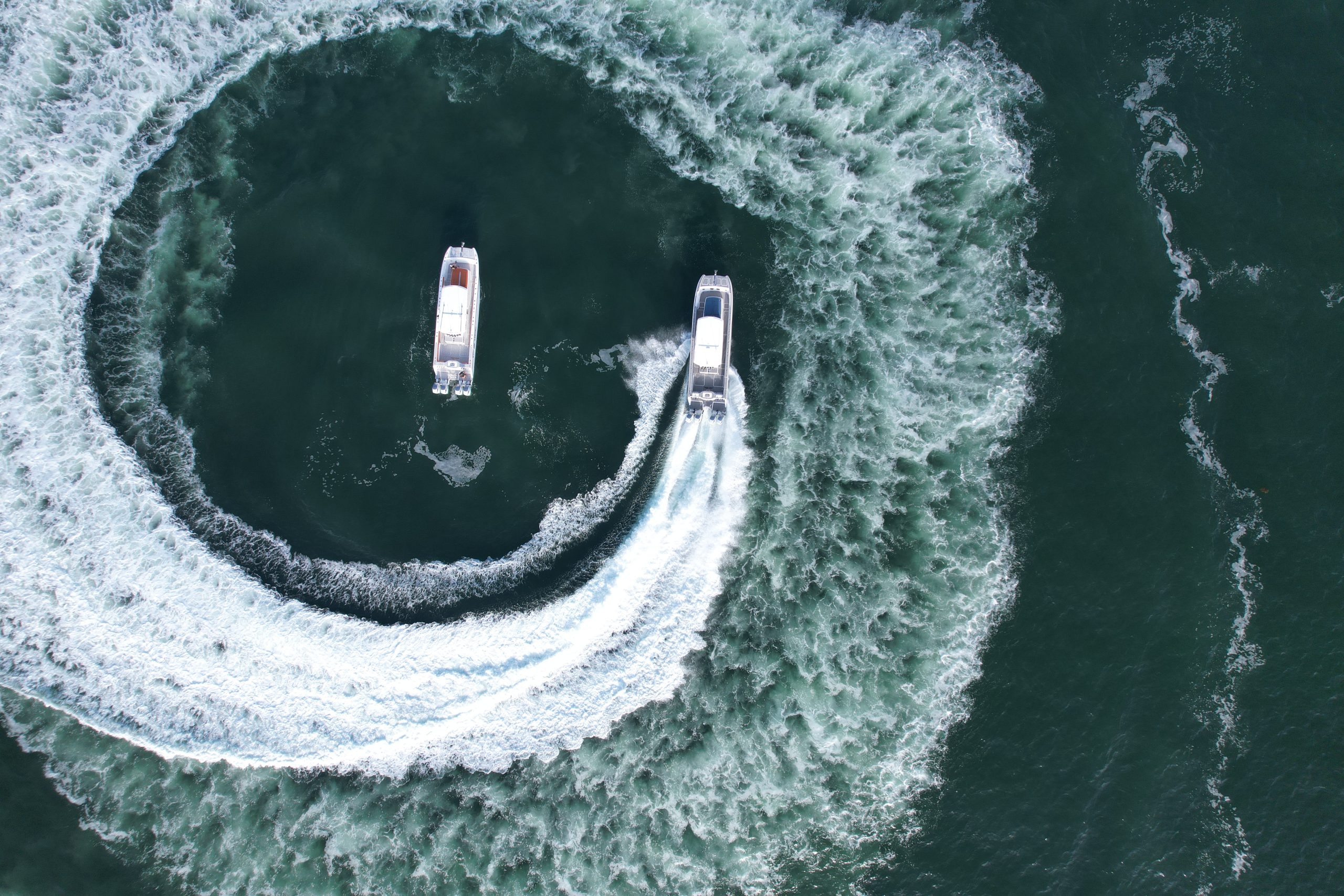
On a Twin Vee, the hulls naturally track flat through a turn because of their deeper V shape and the wide spacing of the engines. We recommend easing back slightly on the inside throttle, not to induce a lean, but to help the boat carve more smoothly while staying level. The outside engine continues to push the turn, while the inside engine provides steering stability.
At the same time, trimming the opposite engine down slightly adds lift to the inside of the turn, much like a trim tab. This combination—small throttle reduction inside, small trim adjustment outside—lets the boat arc cleanly through the turn without rolling hard to either side.
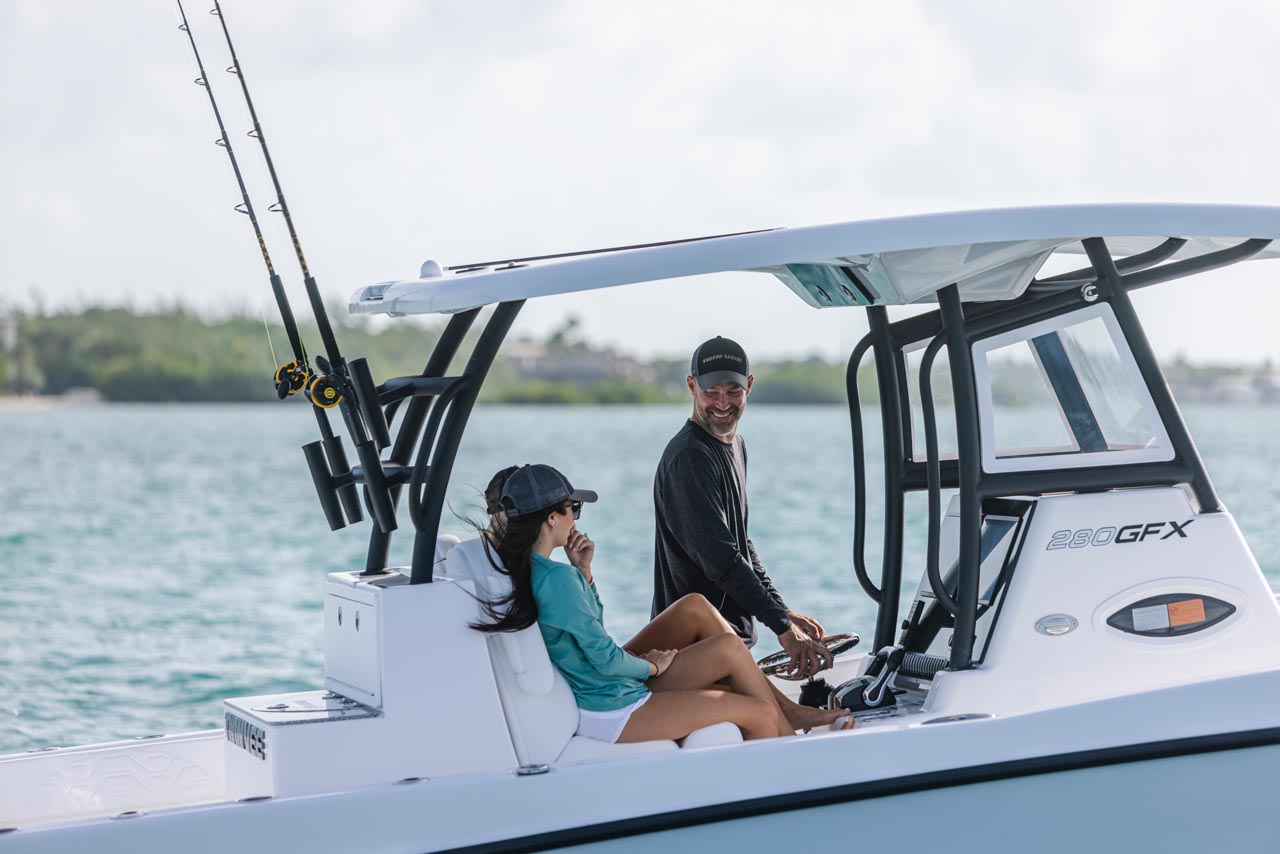
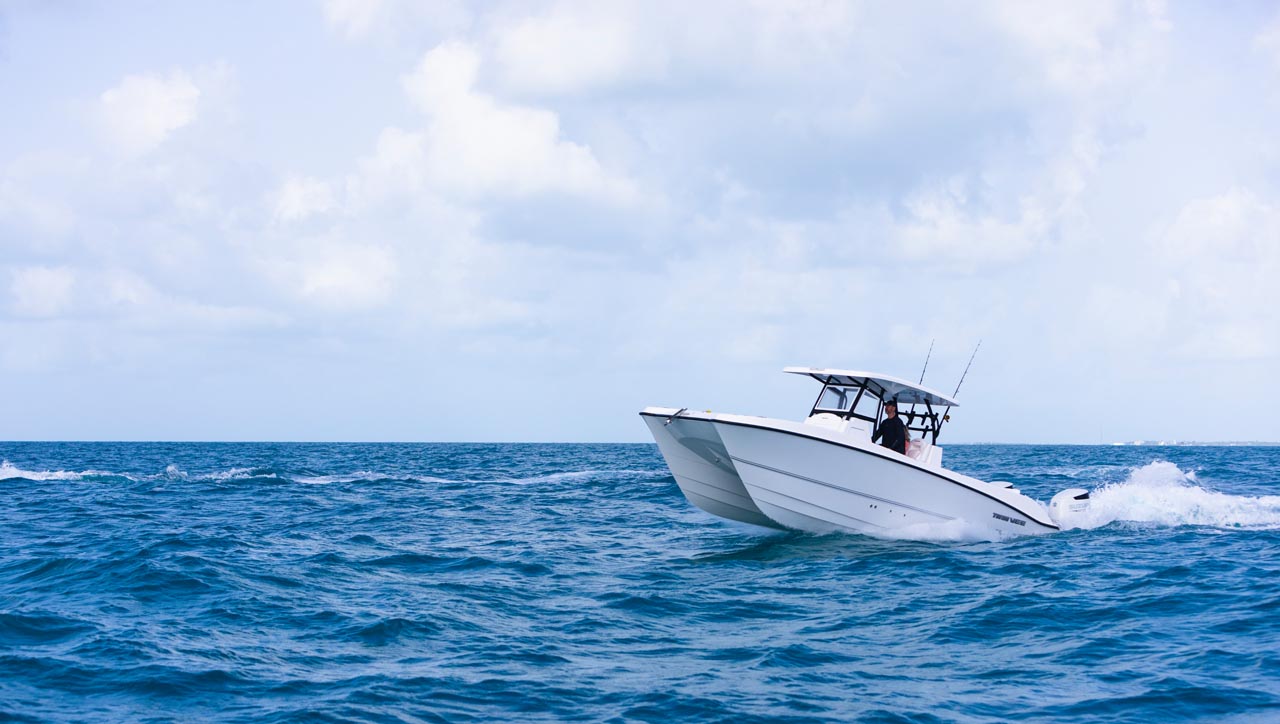
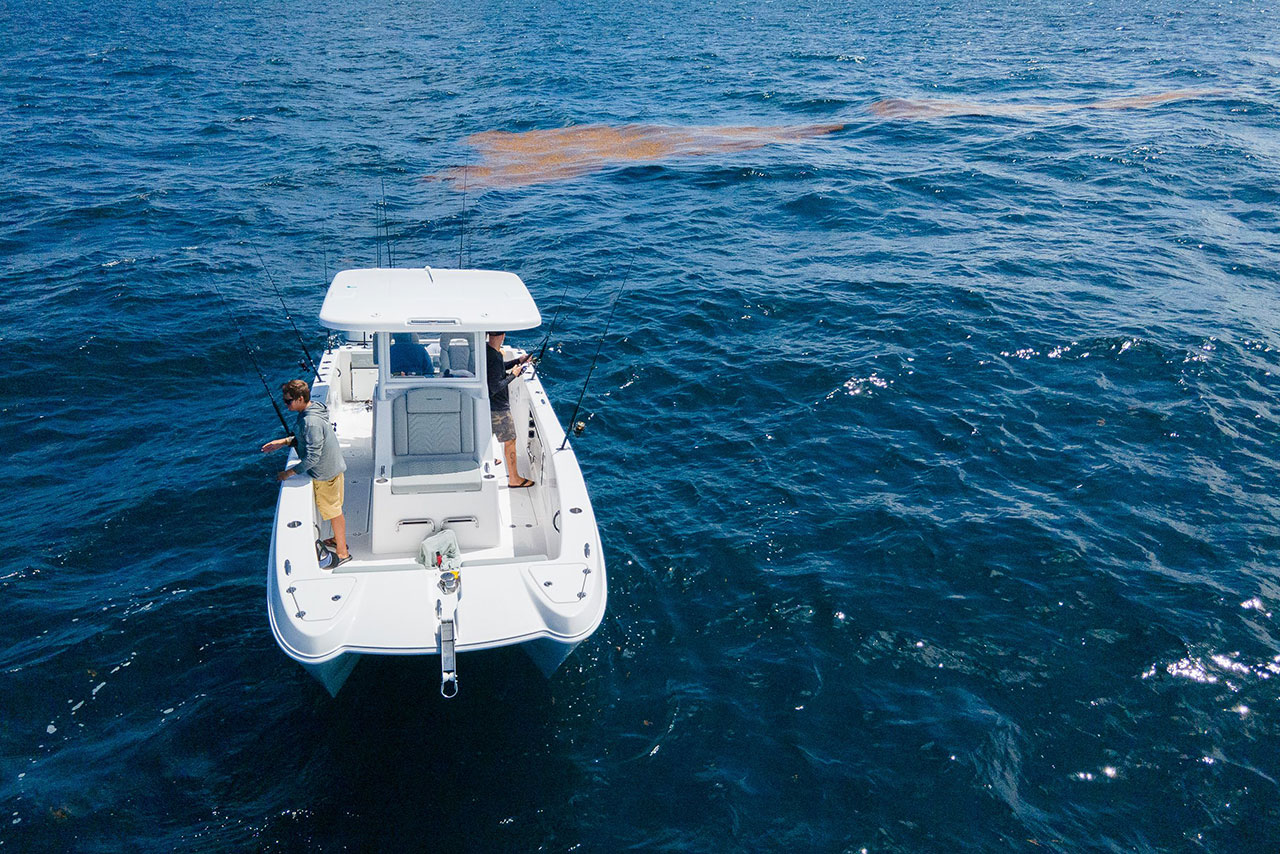
Twin Vees are designed to stay level, not bank dramatically like a monohull. The wide footprint of the twin hulls gives stability and balance, and when handled properly, the boat turns like it’s on rails.
Why Handling Differences Matter
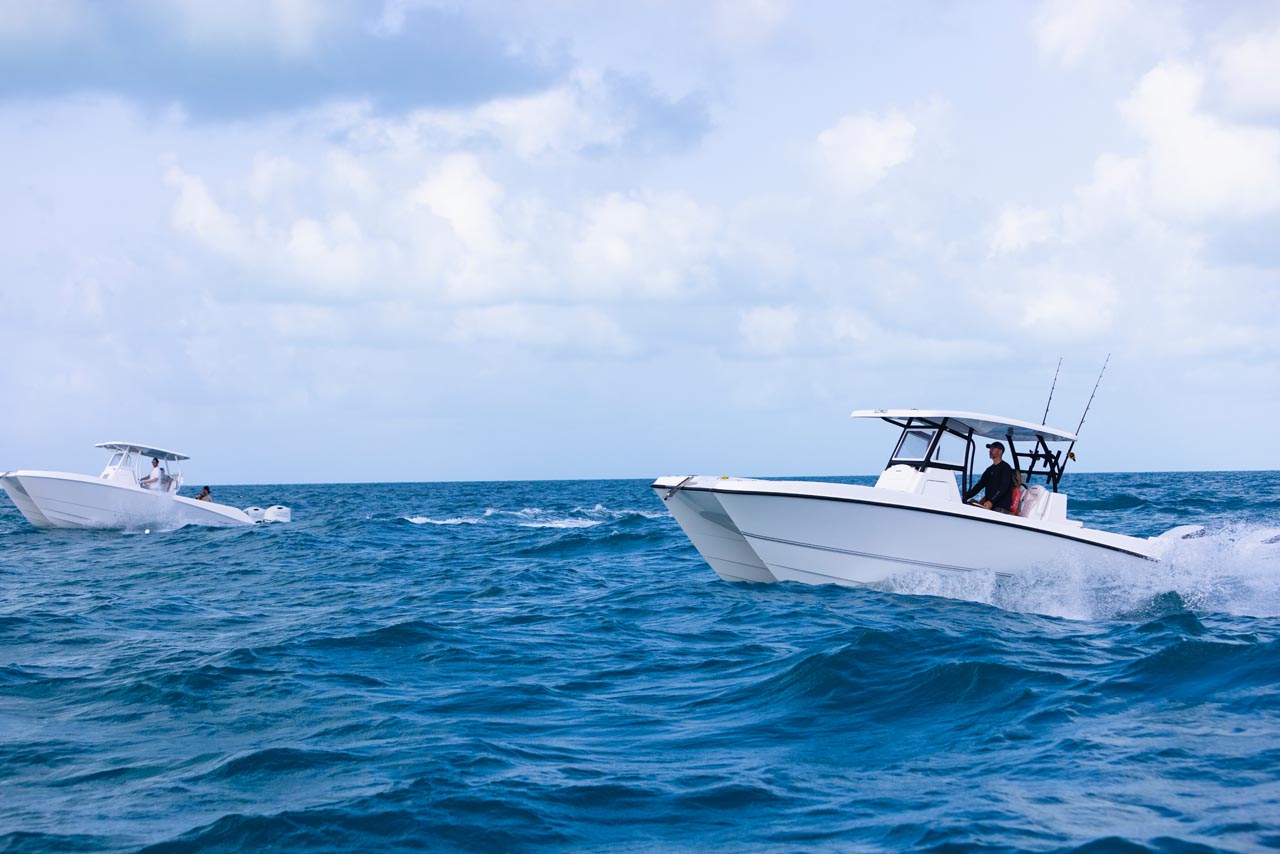
These differences in technique don’t mean one approach is right and the other wrong. They simply reflect different design philosophies. World Cat, Glacier Bay, Freeman, and Twin Vee all use unique hull shapes and tunnel designs. Even small differences in draft, deadrise, tunnel depth, and transom geometry can change how water flows between the sponsons.
What matters is understanding what your particular boat was built to do. Twin Vee’s philosophy has always been about combining speed and comfort through aeration and lift. Our boats are engineered to perform best when running slightly bow-up with air flowing through the tunnel.
When you understand that, the trim-up method makes sense. It’s not about forcing the bow high—it’s about letting the tunnel breathe.
Common Mistakes When Switching from a Monohull
Many new power catamaran owners come from years of running monohulls and instinctively try to drive a cat the same way. The most common mistakes we see include:
- Trimming too low. This forces the bow down and creates a rougher, wetter ride that sometimes sneezes.
- Backing off too much in head seas. Twin Vees ride better at speed when the tunnel is actively packing air and water.
- Over-steering in turns. Catamarans need subtle corrections, not aggressive wheel inputs.
- Expecting a hard banking turn. Cats stay flat. That’s their advantage in stability and comfort.
With a little practice, new owners quickly adjust and realize that a Twin Vee’s behavior is not unpredictable, it’s just different. Once you understand the relationship between trim, throttle, and hull shape, it becomes second nature.
The Takeaway
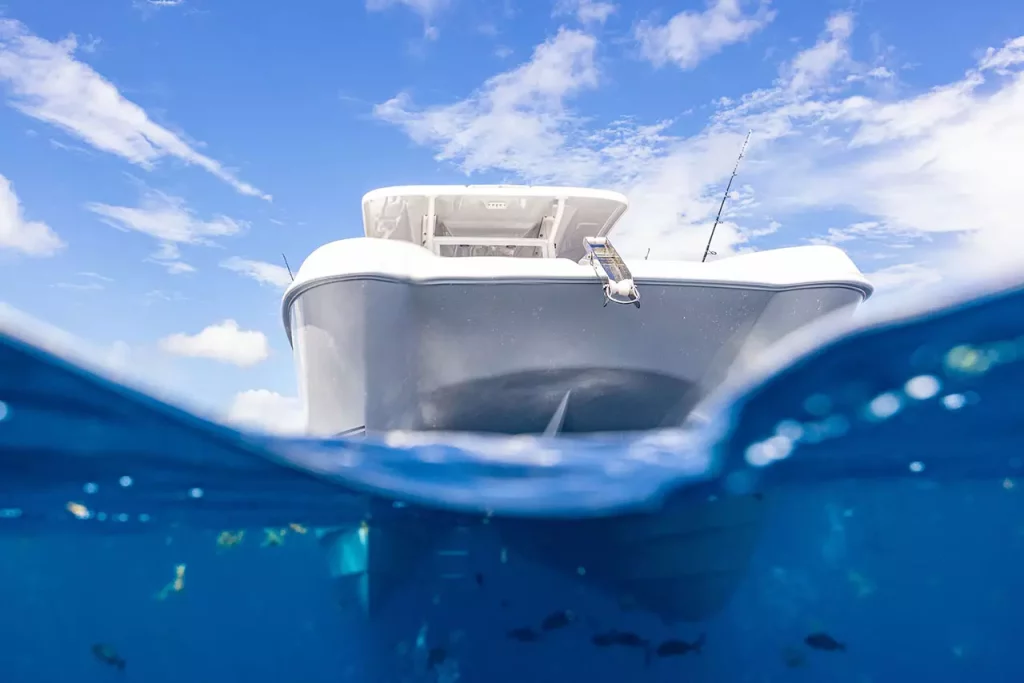
Twin Vee’s approach to trimming and turning comes directly from our hull design. The deep V carried through both sponsons allows our boats to run higher, smoother, drier, and more fuel efficient when trimmed up. In a head sea, the boat rides on its natural cushion of aerated water rather than forcing through waves. In turns, small throttle and trim adjustments keep the boat flat and stable.
Other center console power catamaran builders may recommend opposite methods, and that’s perfectly valid for their designs. What matters most is knowing how your boat’s unique geometry interacts with the water.
Our advice to all new Twin Vee owners is to experiment in different conditions. Start with trim at one-third up, advance your throttle, and increase trim as you reach cruising speed until the props nearly cavitate. You’ll feel the boat lift and smooth out. Then practice slow and fast turns using small, measured inputs on both throttles. The more you do it, the more you’ll feel how naturally the boat wants to stay level and efficient.
That balance of speed, control, and comfort is what sets Twin Vee apart. Different design, different technique, same goal: the best ride on the water.