
How to Trailer and Launch a Catamaran
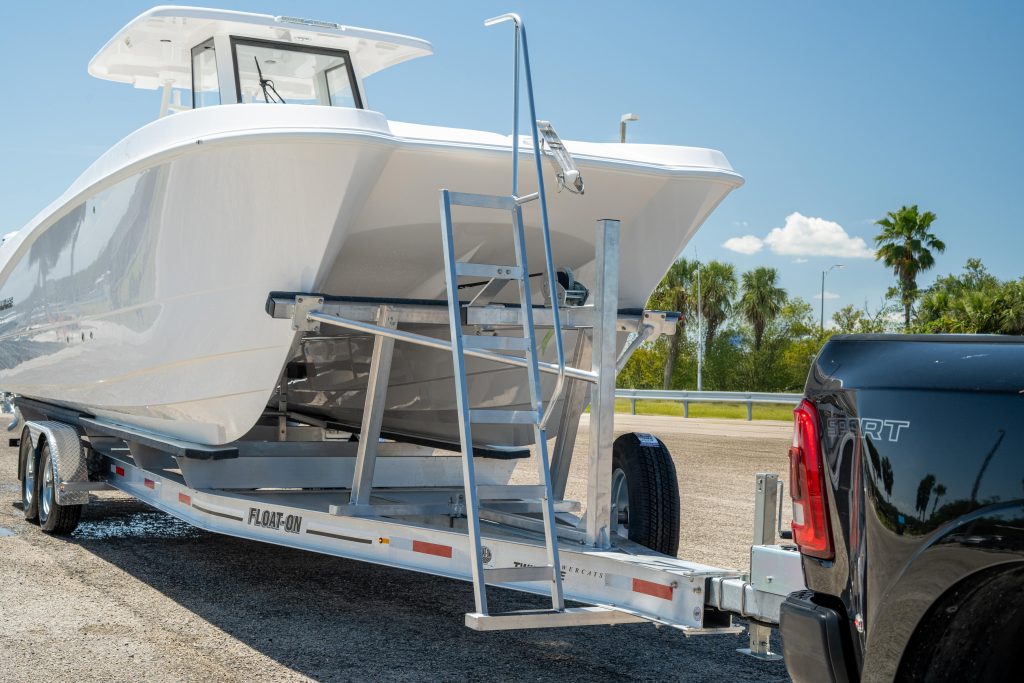
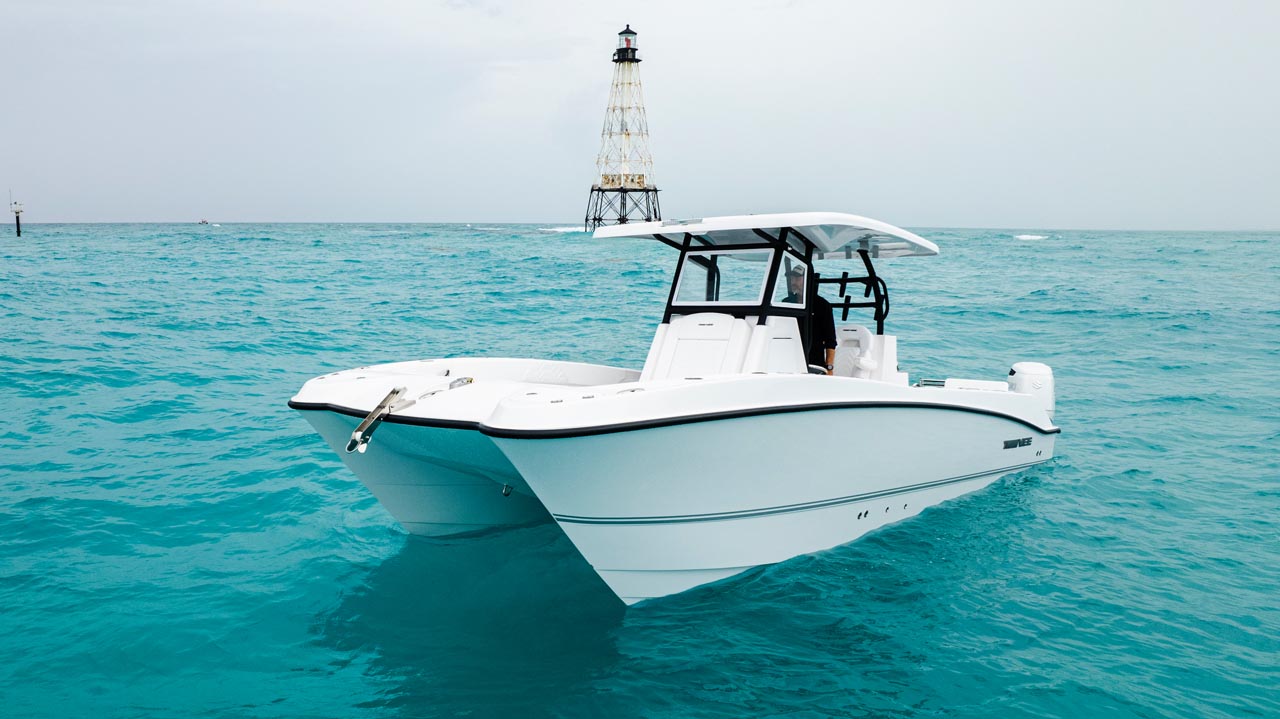
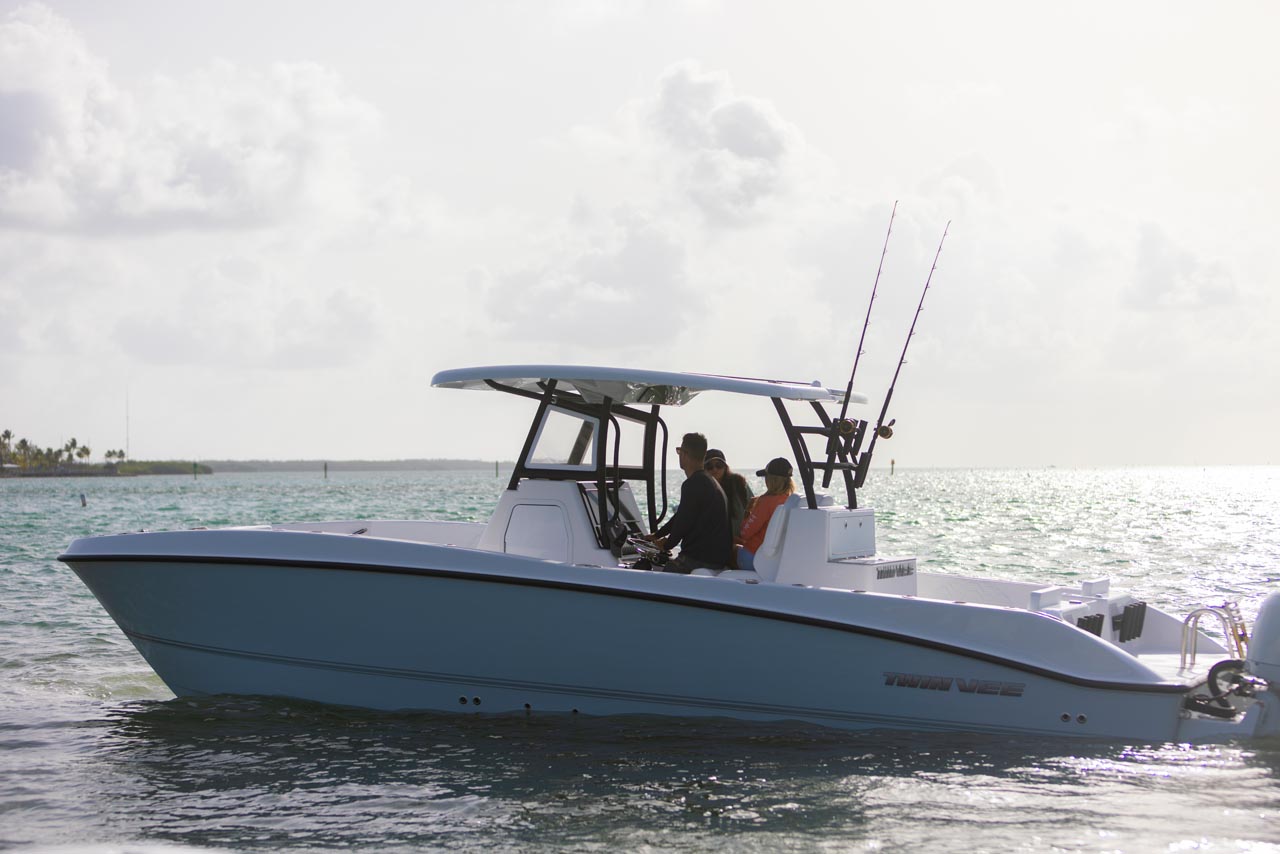
Learning how to trailer and launch a catamaran takes a bit of practice, but once you understand the process, it becomes simple and safe. Whether you’re new to catamarans or just want to protect your investment, this guide walks you through each step from preparation to loading back up after a day on the water.
1. Pre-Launch Trailer & Boat Preparation
Before you even touch the ramp, take a few minutes to perform a full walk-around inspection of your Twin Vee and trailer. This habit helps prevent costly mistakes and damage.
Tools Checklist
- Dock lines
- Fenders
- Gloves
- Trailer guide poles
- Floating key lanyards
- Handheld radio
Check These Items First
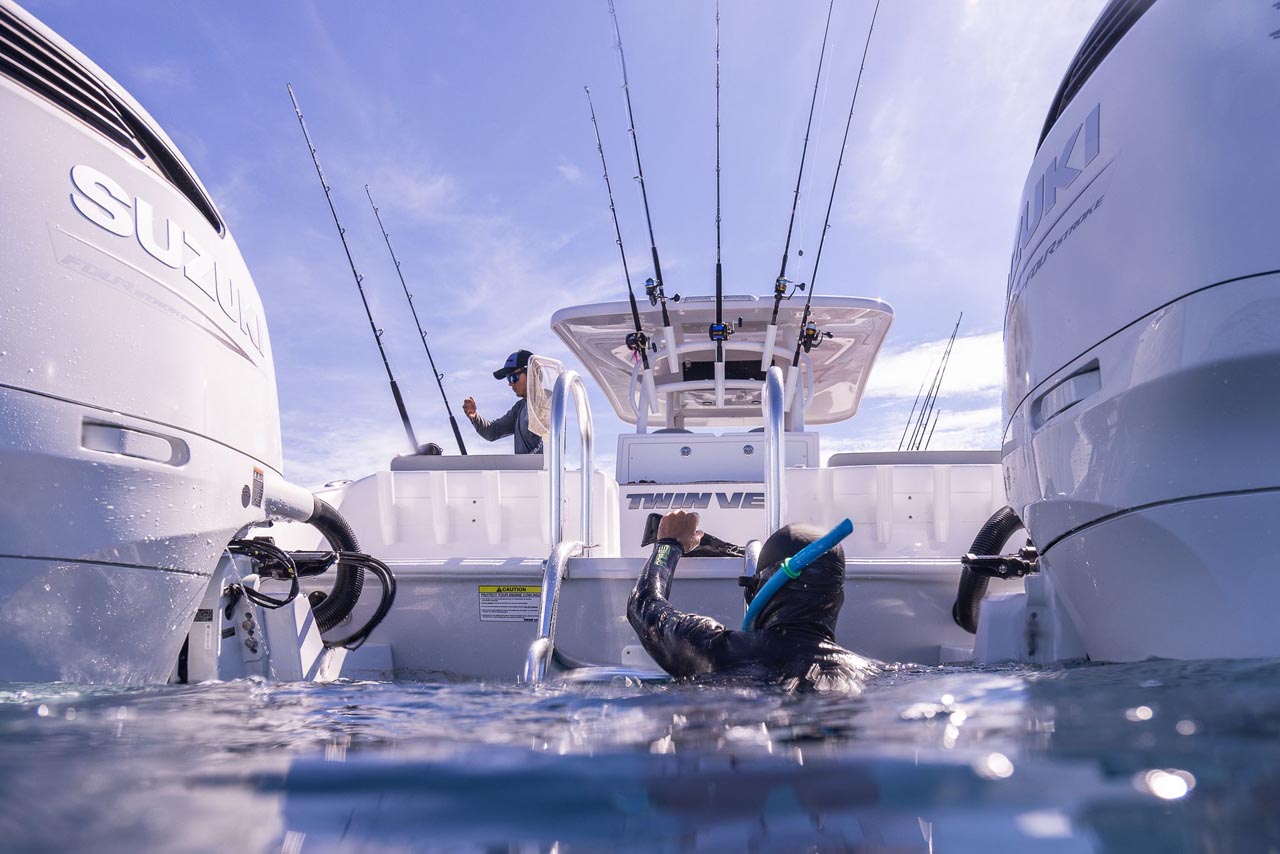
- Drain plugs: Confirm that all three drain plugs in the stern are tight. A missing plug can cause water to fill the bilge within minutes.
- Loose fittings or obstructions: Look over the hull, bunks, and straps. Make sure nothing is hanging, snagged, or blocking the boat’s path.
- Trailer lights and winch: Test your lights, safety chain, and winch strap before backing down.
Once you’ve verified these basics, position your vehicle straight in line with the ramp. Keeping the trailer centered from the start will make launching and loading far easier.
2. Starting the Engines and Checking Steering
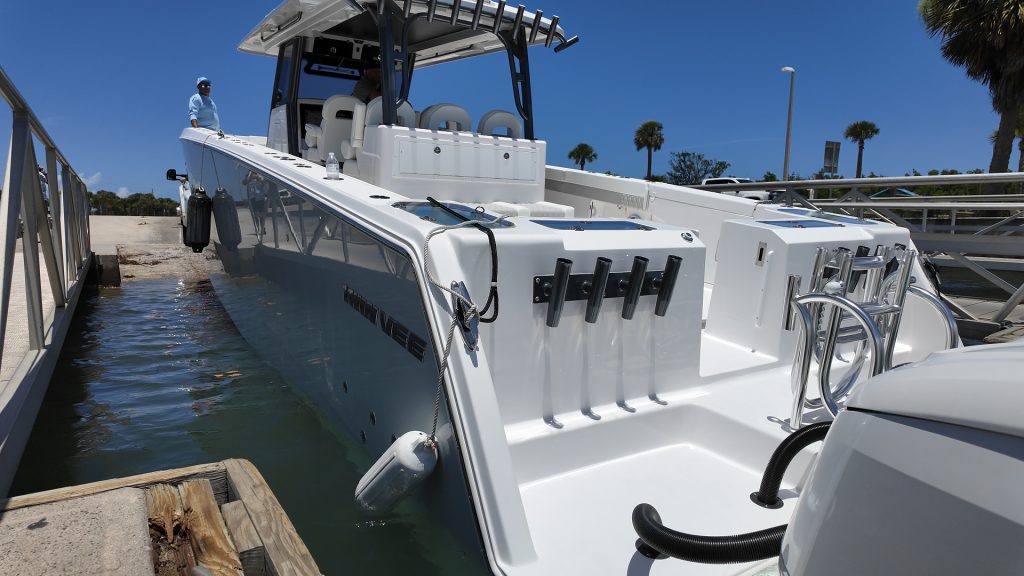
Back the trailer down the ramp about three-quarters of the way, but stop before the boat begins to float. This position lets you safely perform all system checks.
- Start both outboard motors.
- Confirm that steering is responsive and smooth.
- Listen for any unusual sounds before proceeding.
Do not unstrap the boat yet. Make sure everything works first. Only after confirming both engines start and the steering moves freely should the bow strap and transom tie-downs be removed.
Once you’ve verified that all systems are ready, have your driver slowly back the trailer the rest of the way down until the boat begins to float.
3. Launching the Catamaran
This section serves as a simple catamaran launching guide for both new and experienced Twin Vee owners. As the boat begins to lift from the trailer bunks, shift it gently off with short, controlled throttle inputs. Then tie the boat to the dock at two points—for example, midship and bow or midship and stern. Tying in two places keeps the boat from swinging in wind or current.
Now you can safely load passengers and gear. Before leaving the dock, take a moment to tell everyone aboard where to find life vests and fire extinguishers. A quick safety briefing ensures everyone knows what to do in an emergency.
4. Returning to the Dock
When it’s time to come back in, remember the rule: slow and steady wins the race. Most damage at marinas happens when someone rushes docking.
Approach the dock slowly, compensating for wind and current. Once alongside, tie off in at least two locations again to keep the boat secure while passengers disembark.
While passengers unload, have your trailer driver line up perfectly with the center of the ramp. A crooked trailer complicates the whole process and can lead to scratches, bent fenders, or worse. Always position the trailer straight and centered.
5. Trailer Position and Depth
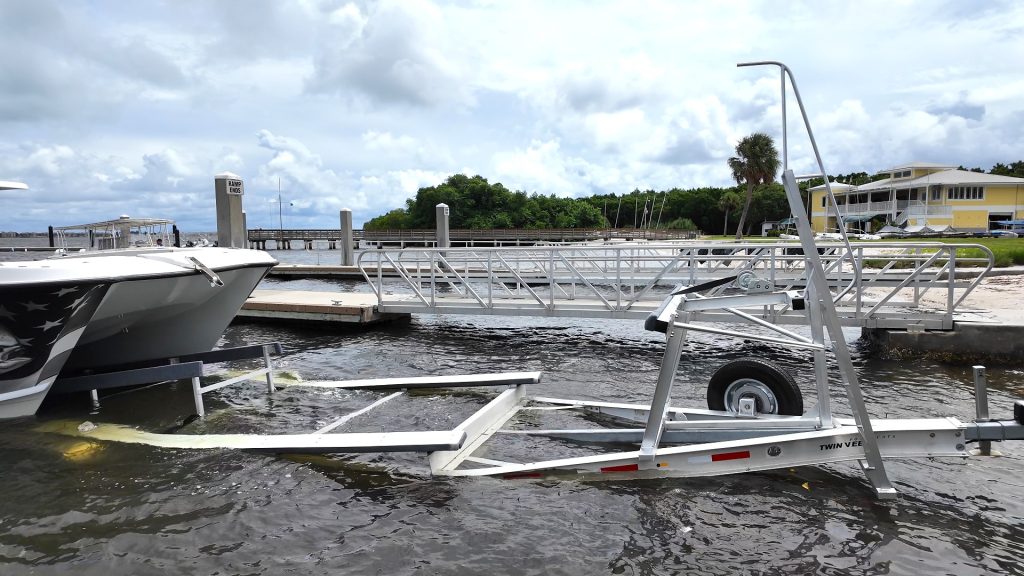
When trailering a powercat, ramp angle and tide level determine how deep the trailer should go.
- Steep ramp and high tide: You won’t need to back in as deep.
- Shallow ramp or low tide: You’ll need to back farther into the water so the boat can float onto the trailer bunks without scraping.
As a general rule, leave about three feet of the plastic guide bunks exposed above the waterline. This gives you enough space to align the bow correctly with the trailer’s winch post.
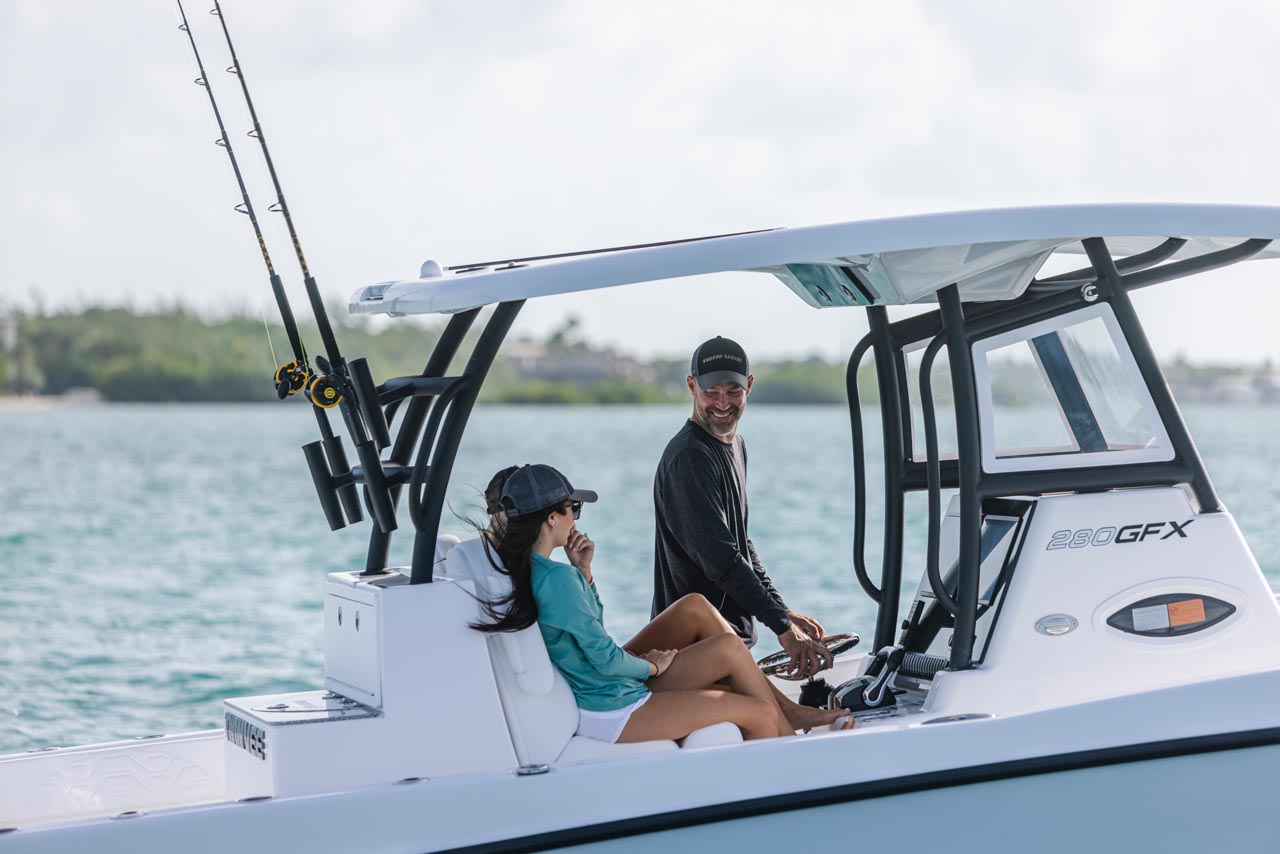
However, remember that ramp and tide conditions vary. If you are launching or loading a larger model like a 280 GFX2 or 340 GFX Twin Vee, you may need to motor the boat gently up the trailer or have the driver back down slightly farther. The goal is always the same—load safely without scraping or damaging the hull.
6. Aligning and Loading the Boat
Once the trailer is in position, line up the anchor roller at the front of your boat with the winch post on the trailer. The winch post acts as your guide. As you ease forward, the trailer’s side guides will help center the hulls automatically.
If you notice strong wind or current, be patient. Do not try to force the boat onto the trailer at an angle. If your approach isn’t perfectly straight, back out and realign before trying again. Coming in sideways risks hitting a fender or a cross member, which can damage the gelcoat or hull.
It is better to make two or three careful attempts than to rush and repair fiberglass later. If you are new to how to load a catamaran on a trailer, remember that small corrections and patience make the process smoother.
7. Dealing with Wind and Current
Wind and current are the most common challenges when loading a catamaran. Because Twin Vee hulls are wide and light for their size, even moderate wind can push the boat off line. Here’s how to manage it effectively:
- Approach into the current or wind when possible. This gives you better steering control.
- Use short bursts of throttle rather than continuous power. This helps correct alignment gradually.
- Let the trailer guides do the work. They are designed to center the hulls automatically once you are properly aligned.
If you can’t maintain a straight approach, reposition the boat and try again. Taking your time prevents most loading damage.
8. Securing and Hauling Out
When the bow reaches the trailer stop, attach the winch strap and crank it tight. Make sure the bow eye sits snug against the roller. Attach the safety chain as a secondary connection before hauling the boat up the ramp.
Once on level ground, stop and double-check the strap tension. It’s common for the boat to settle slightly after leaving the water. Tighten the winch strap again if needed.
Before driving away, open the bilge plugs if you took on water. Letting any remaining water drain prevents added weight and pressure during transport.
9. Common Mistakes to Avoid
- Unstrapping before checking engines. Always start the engines first.
- Backing in too deep. This causes the boat to float above the bunks and misalign.
- Rushing at the dock. Most accidents happen when people move too fast.
- Loading at an angle. Even a slight misalignment can damage fenders or the gelcoat.
- Ignoring wind and current. Always plan your approach based on conditions.
10. Final Tips for a Smooth Launch and Load
- Take your time. Catamarans behave differently than monohulls, especially around docks.
- Communicate clearly with your driver. Hand signals or radios make things easier.
- Use guide poles on your trailer to help visualize alignment from the helm.
- Inspect the trailer periodically for wear on bunks, rollers, or wiring.
By following these steps consistently, trailering your Twin Vee becomes second nature. You’ll protect your boat, stay safe at busy ramps, and spend more time enjoying the water instead of fighting the dock.
The Bottom Line
Launching and loading a Twin Vee catamaran requires patience, awareness, and a few key techniques. Always inspect the boat before backing down, start both engines before releasing straps, and align perfectly with the trailer when loading. Use the three-foot bunk rule as a starting point, but adjust for ramp steepness and tide.
If you stay calm, communicate clearly, and let your trailer guides do their job, you’ll find that trailering a Twin Vee is simple, efficient, and safe. Once you master these steps, launching and loading your center console catamaran feels natural. With practice, you’ll be able to launch or load your catamaran smoothly every time, no stress, no damage, and no rush.